



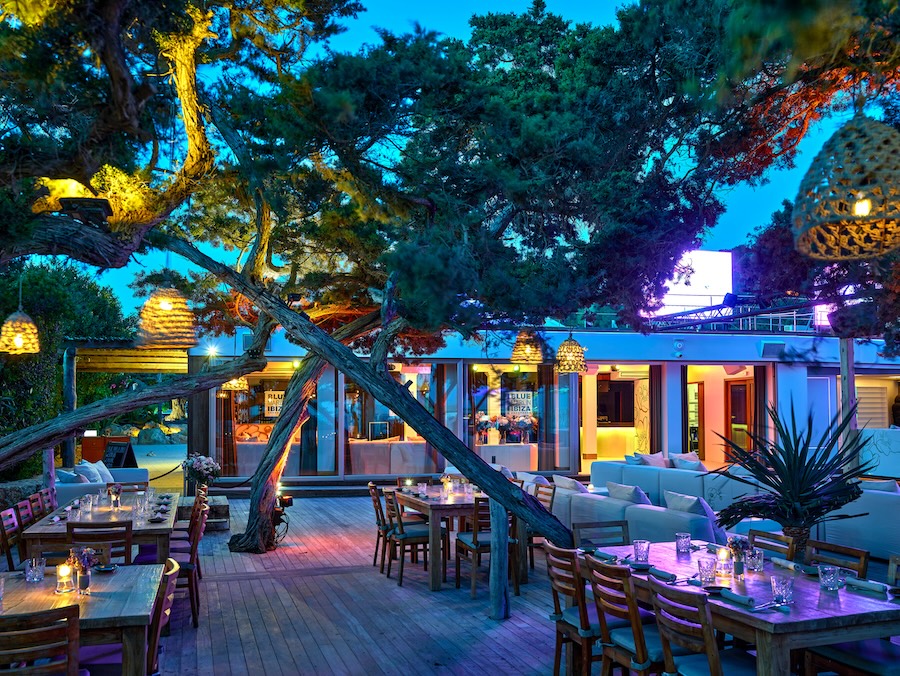
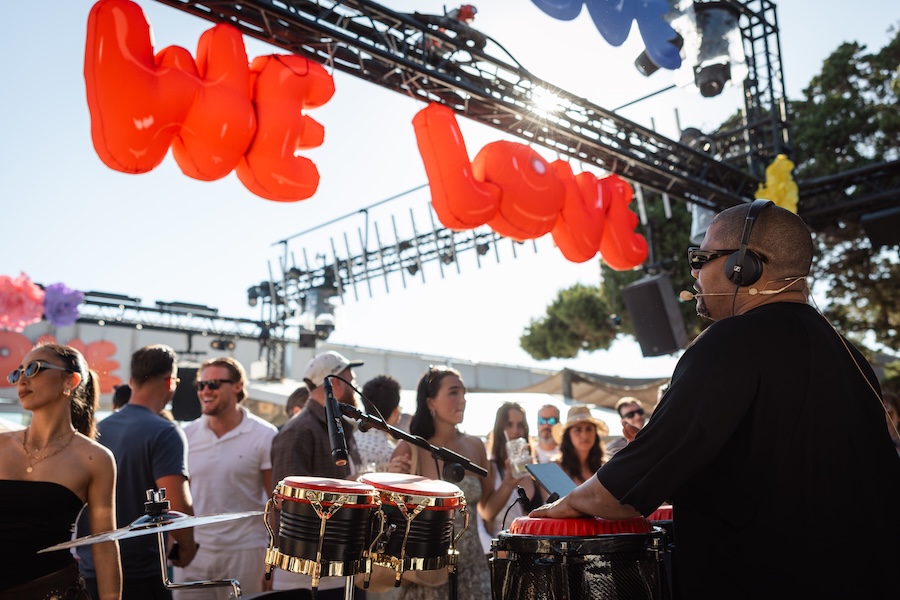
Everyone remembers the DJ at Blue Marlin Ibiza. Fewer people talk about the fact that the kitchen is doing something just as ambitious, twenty meters from the decks, with a fraction of the attention. Blue Marlin built its name as one of the world’s great beach clubs. What it built alongside that, quietly, is one of Ibiza’s most disciplined restaurants.
To understand why that matters, it helps to understand what Ibiza actually values, underneath the reputation. The island’s identity was not built by luxury developers. It was built in the 1960s and 70s by artists, free thinkers and wanderers who settled on a rocky Mediterranean outpost and built a culture around freedom, creativity and a close relationship with the land and sea around them. That spirit shows up today in the hippie markets of Las Dalias and Punta Arabí, in organic farms scattered across the interior, in a food culture that has always treated locally grown and locally caught as a value rather than a trend. Ibiza absorbed decades of global attention, superclubs, celebrity residencies, luxury developments, without losing that founding instinct. The island still runs on the same principle it always has: take what the land gives you, keep it honest, and build something worth sharing around it.
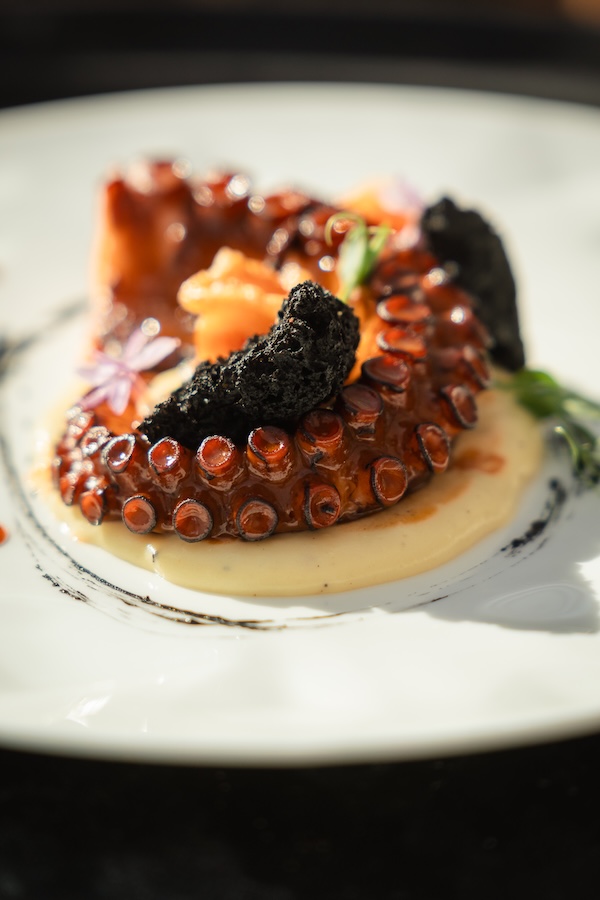
Blue Marlin’s kitchen operates on exactly that principle. The rule is called KM0: fish from local boats, produce from island growers, nothing brought in from further away than it has to be. It sounds simple until you try to run a kitchen this way at volume. The menu is rewritten daily, not for effect but because the catch and the harvest decide it. Some mornings that means turbot. Some mornings it means whatever the Ibicenco waters gave up, and the chefs build around it rather than the other way round.
That constraint produces a kind of freedom. Certified Wagyu shares a table with tomatoes picked hours earlier. A sushi programme, built on Japanese technique and unapologetically precise cuts, sits beside pasta made for sharing and a raw bar that shifts with the tide. None of it reads like fusion for its own sake. It reads like a kitchen that refuses to choose between technical ambition and where its ingredients actually come from, and has spent two decades proving it does not have to.
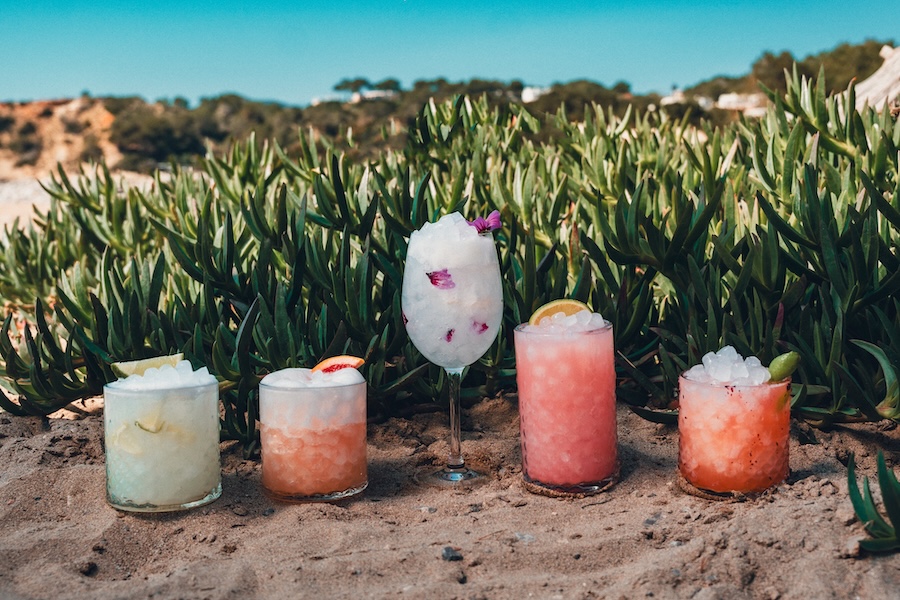
The cocktails follow the same logic. Made properly, from real citrus and real syrups rather than a gun behind the bar, they are built with the same seriousness as the food beside them. Order the sushi and a cocktail together and the point becomes obvious fast: a beach restaurant can hold a city kitchen’s technical standard while sourcing more locally than most city kitchens would ever attempt.
None of this is easy to sustain. A menu tied to what boats and farms deliver that day is a harder business than one built on a warehouse and a freezer. It means daily risk, daily adjustment, and a kitchen good enough to make that risk invisible to the guest.
Twenty years on, Blue Marlin has not softened that discipline to scale it. It has used it as the reason people keep coming back, long after the sun goes down and the DJ takes over. The next time someone asks what makes Ibiza different, point them toward Cala Jondal at lunchtime, before the music starts, when the only thing playing is the sound of a kitchen doing exactly what the island taught it to do.