


Mohamed Alabbar on artificial intelligence, the speed of change and the one thing no machine will ever be able to build.
I have twelve artificial intelligence agents. They read my emails. They listen to my speeches. They study my conversations and the decisions I make and the way my mind moves from one idea to the next. They are, in a very real sense, learning how to be me.
One of them recently analysed everything it had gathered and came back with a conclusion. It told me that one percent of my mental energy was spent on projects and global instability. The remaining 98 percent, it said, was consumed by a single subject.
Artificial intelligence itself.
I sat with that for a long time. It impressed me.
“The speed AI gives me is extraordinary. The ideas it unlocks, the clarity it brings. I have never felt more capable.”
The truth is I have never felt more energised by anything in my professional life. And I have never felt more aware that we are moving into territory none of us fully understands yet.
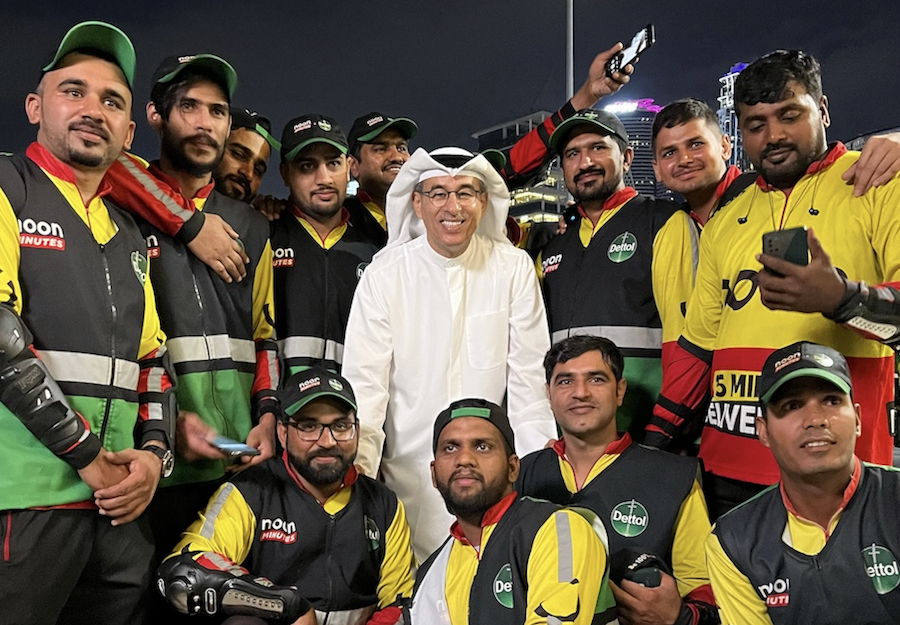
What these agents have done to my working life is difficult to fully describe. I move faster. I see further. Ideas that would once have taken weeks to interrogate I can stress test in hours. Across real estate, ecommerce, hospitality, banking, food and emerging markets, I am operating with a clarity and a speed that simply did not exist before. We serve around 70 million meals a year across the Arab world. The efficiency AI brings to an operation at that scale is extraordinary. It has also transformed something as deeply human as hiring. One of my agents now conducts a forty minute interview when I am considering promoting or bringing in someone new, analysing capability and thinking in ways that would take a team of people weeks to assess. It is as though I have acquired an entirely new set of senses. I will not pretend otherwise: this technology has made me significantly more capable and I find that incredibly exciting.

Founder, Emaar Properties | Founder, Noon |
Chairman, Eagle Hills
What I find remarkable about the UAE is that the leadership understood this before almost anyone else. Why would a country sitting on enormous oil wealth invest so heavily in AI research and infrastructure? Because they are not governing for today. They are governing for the generation after next. That is the kind of thinking I have tried to carry into my own businesses my entire life.
And yet.
When I am asked what still moves me most deeply, my answer has nothing to do with technology. It is two chairs in the desert. A fire. The stars above and the people I love beside me. It is my mother at 84 telling me not to forget my prayers, still surrounded by her grandchildren and great grandchildren, still the centre of everything. It is a child on a bicycle in one of our developments in Belgrade. It is a family walking together by the river on a warm evening in a neighbourhood we helped bring back to life. These are the moments that feel like the point of everything.
No machine taught me that. No algorithm will ever feel it.
I think this is the central question of our time and it is one that business leaders, governments and societies need to sit with far more honestly than we currently do. Technology will keep accelerating. That is not negotiable and it would be foolish to wish otherwise. But speed is not the same as progress. And efficiency is not the same as a good life.
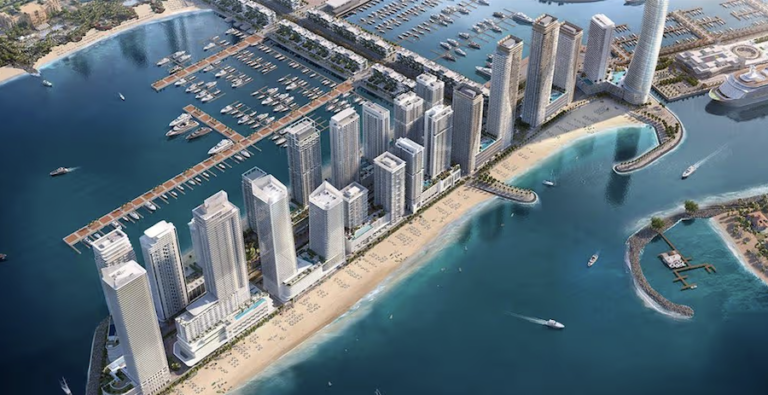
The UAE was not built on oil alone. It was built on something much harder to quantify: a belief that human dignity, community, beauty and ambition belong together. That you can be modern without abandoning your values. That progress and soul are not opposites. Today 205 nationalities live here, work here and build here together. They are not merely coexisting. They are prospering together, creating together, looking at the future together and saying: the future looks good for me and my family and my children. I believe that is the truest definition of what good governance can achieve; a place where your children have a roof above their heads, a good education, security and a future that looks hopeful. That is what I have tried to build into every project I have worked on.
AI will not change that for me. If anything, the faster the world moves, the more deliberately I find myself returning to the simplest human questions. Are we genuinely creating opportunity or simply displacing people? Are we building communities or just optimising systems? Are we leaving the world more hopeful than we found it?
I embrace the future with everything I have. My twelve AI agents will help make sure of that. But I will not allow speed to become the only measure of success.
The machine can read my mind. It cannot feel it. That difference is everything.
This is part two of twelve. Beyond Profit is a twelve-part series published exclusively on The Buzz in which Mohamed Alabbar, founder of Emaar and Noon, family man, and one of the Arab world’s most influential business leaders, shares personal reflections on leadership, legacy and what it really means to build something worthwhile. The series moves beyond towers and financial results to explore the values, experiences and hard-won lessons of a man who grew up with nothing, has spent a lifetime building cities, businesses and opportunities across more than twenty countries, and is now thinking harder than most about the kind of future we are all building together: human, technological and everything in between. A new instalment publishes each month.