



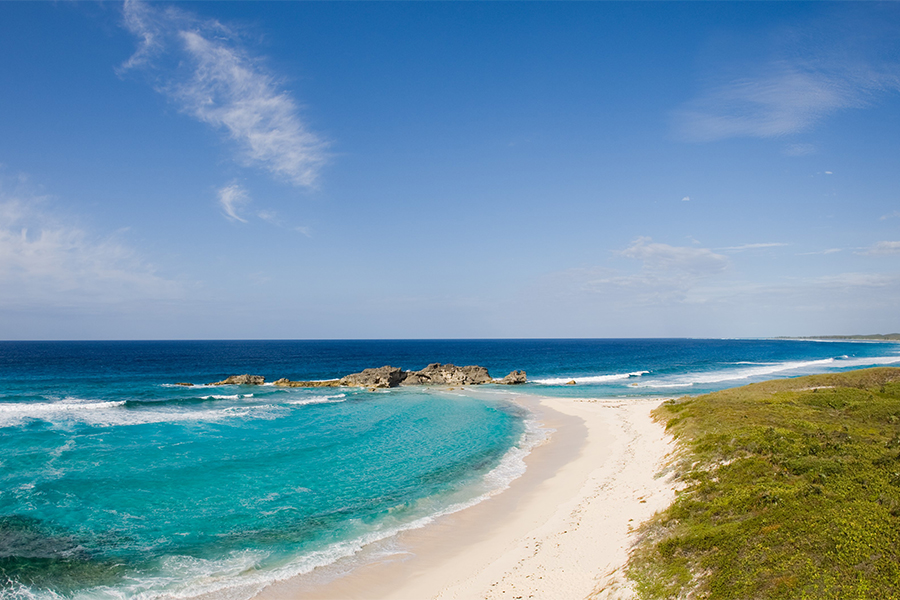
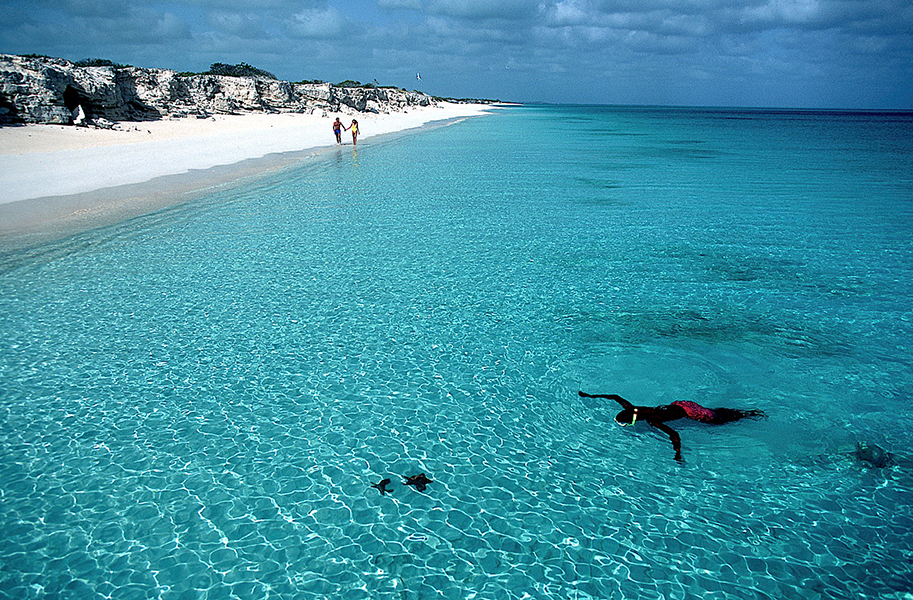
There is a moment, flying into Providenciales, when the geometry of Turks and Caicos reveals itself. Not density, not skyline, but space. An archipelago of more than forty islands, most untouched, scattered across a stretch of water that feels deliberately unclaimed. It is this restraint, more than anything, that has defined the trajectory of its real estate market.
Turks and Caicos was never built to compete on volume. “The size of these islands, we could never try to be a mass destination,” says Paul Pennicook, interim CEO of Experience Turks and Caicos. “It’s the quality of the visitor experience that’s important, and that’s why we have stayed in the luxury category.”
That philosophy has steadily shaped one of the Caribbean’s most distinctive investment stories. What began as a tourism pivot away from the islands’ historic salt industry has matured into a real estate-led ecosystem, where capital flows through residences as much as resorts. In many ways, the hospitality sector has followed property, not the other way around.
It is a model that feels increasingly aligned with a new generation of globally mobile investors. Buyers are not simply booking stays. They are anchoring themselves, returning repeatedly, and bringing their networks with them. “The industry here has been built almost on the back of real estate development,” Pennicook explains. “Investors come in, they invest, and then they bring others.”

For years, that cycle was driven overwhelmingly by North America, which still accounts for more than ninety percent of visitors. But the next phase of growth is being engineered with a different map in mind. Europe and the UK sit at the centre of it.
“We must diversify our source markets,” Pennicook says. “We are looking to Europe first.”
The rationale is both practical and strategic. As a British Overseas Territory, Turks and Caicos operates within a familiar legal framework for UK investors, with English as the working language and a governance model that signals stability. British Airways already connects London to the islands, and search data is pointing to rising interest from cities across the continent, from Paris to Zurich.
There is also a shift in mindset among European buyers themselves. The traditional Mediterranean circuit still dominates second home ownership, but there is growing appetite for destinations that feel less saturated, more curated, and ultimately more private. Turks and Caicos offers that in abundance.
The product has evolved to match. Across the islands, the dominant development model is no longer the standalone hotel, but integrated residential communities anchored by global hospitality brands. The Ritz-Carlton, St. Regis, Hyatt and Kempinski are all embedding residences into their projects, creating hybrid assets that function as both home and investment. That niche opportunity of second home ownership is perfect for Turks and Caicos, notes Pennicook.
“Turks and Caicos is not designed for scale. It is designed for value.”
Paul Pennicook, interim CEO Experience Turks and Caicos
This is not incidental. It reflects a deeper structural advantage in the market. Unlike destinations reliant on large-scale hotel development, Turks and Caicos has grown through what are effectively capital efficient models. Residences fund construction, reduce risk for developers, and create a built-in base of repeat visitors.
For European investors, the appeal lies in that duality. Ownership without isolation. Privacy with access. A property that can sit discreetly within a portfolio, but also generate return through managed rental programmes when not in use.
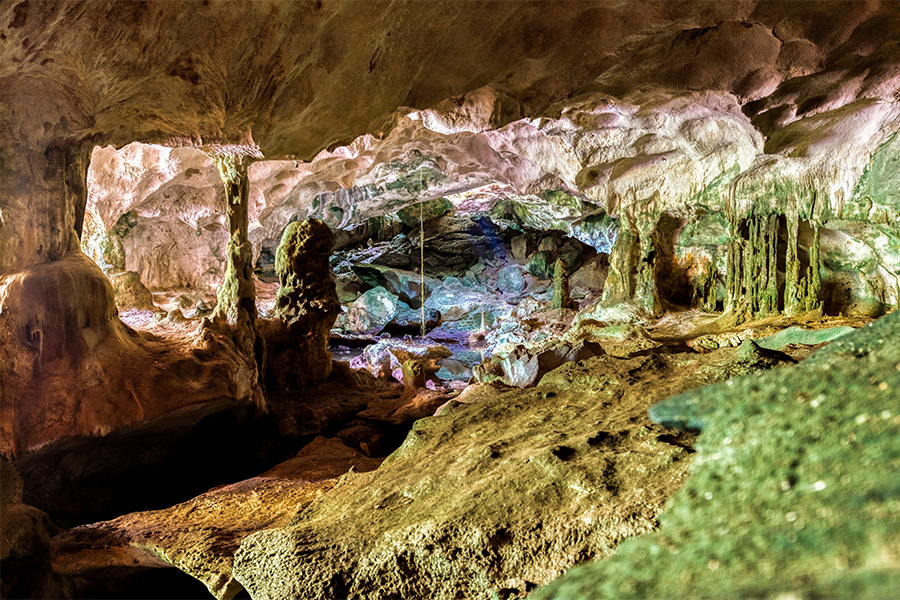
Yet the most significant shift underway is geographic. Providenciales, long the epicentre of development, is no longer the sole focus. A deliberate pause on new approvals there is pushing attention toward other islands, from South Caicos to North Caicos, where infrastructure is improving and new projects are taking shape.
The intention is not simply expansion, but distribution. “We want to spread the development out and spread the benefits of tourism throughout the communities,” Pennicook says.
South Caicos offers a glimpse of what that future might look like. Once peripheral, it is now home to high-end resorts and residences, supported by direct international flights. It is a reminder that scarcity, when managed carefully, can be extended rather than diluted.
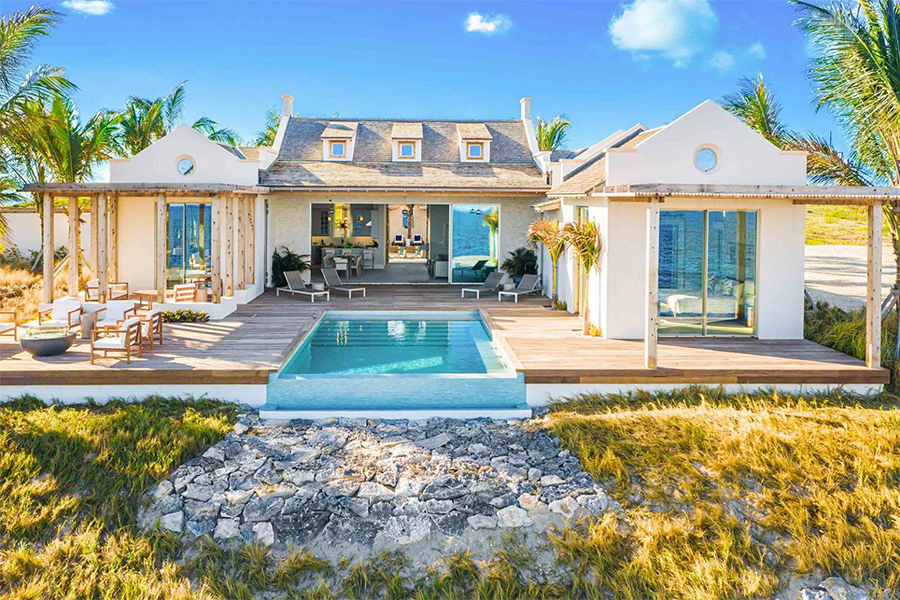
That management is critical. The islands’ value is inseparable from their environment, and the government has taken an unusually structured approach to protecting it. A formal carrying capacity study now guides development decisions, ensuring that growth does not outpace the ecosystem.
“Whatever is done must be sustainable for the long term,” Pennicook says.
This is not simply regulatory discipline. It is market logic. The buyers driving the top end of the market are increasingly sensitive to environmental impact, and destinations that fail to protect their natural assets risk eroding their own value proposition.
There is also a parallel effort to deepen the cultural layer of the experience. Turks and Caicos has long traded on its natural beauty, but there is a growing emphasis on local identity, from culinary traditions to community-led events like the island fish fry, where visitors move beyond the resort and into the rhythm of the islands.
For investors, that matters more than it might seem. A destination that feels lived in, rather than staged, has a different kind of staying power.
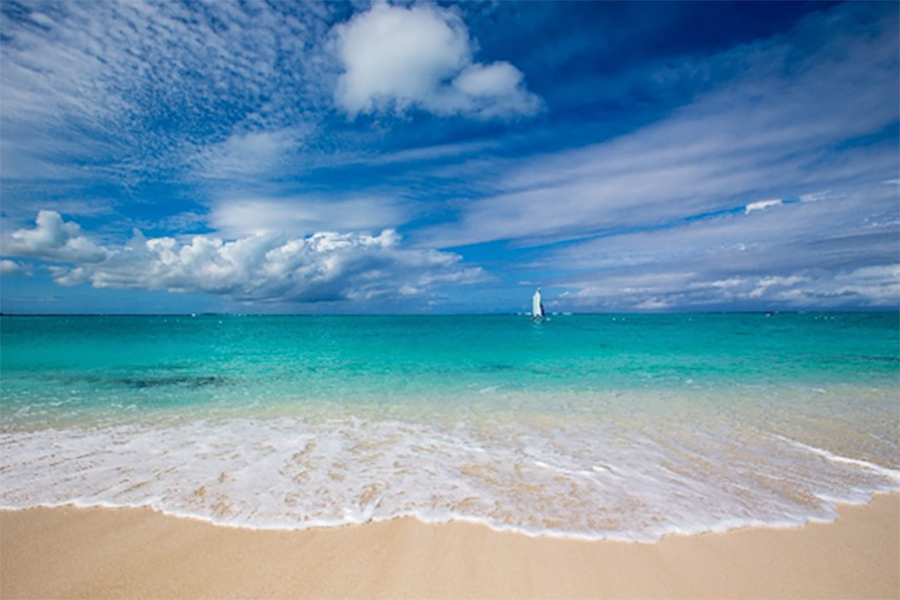
All of this is converging at a moment when global capital is reassessing where it wants to be. Political stability, legal clarity, lifestyle quality, and long-term scarcity are being weighted differently. Turks and Caicos sits at the intersection of those forces, still early enough in its evolution to offer upside, but established enough to feel secure.
It is not a market trying to be everything. It is a market that has chosen its lane and is refining it.
“The whole development of tourism has to be integrated into a plan for the community and the destination,” Pennicook reflects. “You have to plan your tourism to fit your particular destination.”
In Turks and Caicos, that plan is becoming increasingly clear. Fewer people, higher value. More homes, fewer transient stays. Broader geography, but tighter control.
For European and UK investors looking beyond the obvious, it is a compelling proposition. Not just a place to visit, but a place to return to, to invest in, and ultimately, to belong.
And in a world where true scarcity is becoming harder to find, that may be the most valuable asset of all.