



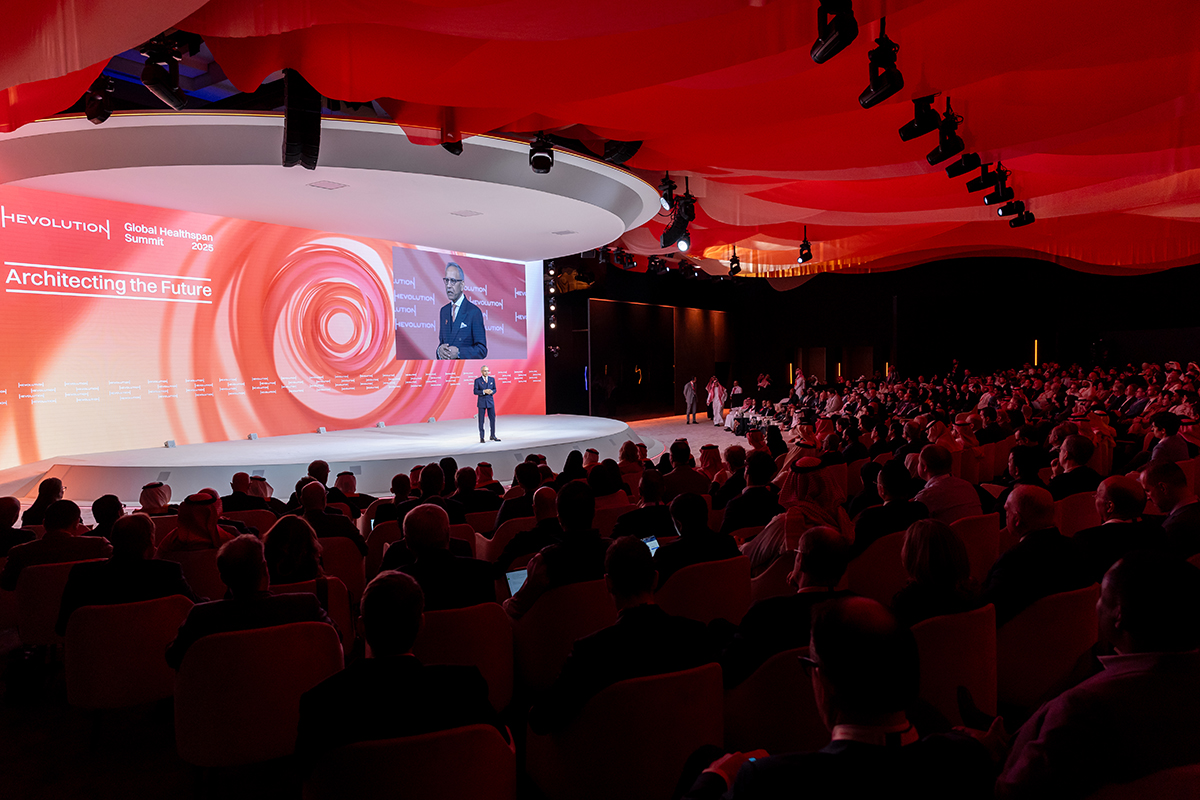

There’s a moment in Hevolution’s new Global Healthspan Report 2025—published by the Saudi Arabia based philanthropic foundation focused on extending healthy human lifespan—when the data stops reading like a scientific snapshot and starts looking more like an economic warning. Not the familiar story of ageing populations or rising healthcare costs, but something sharper: a structural shift in how countries will compete, grow, and remain solvent in a world where people are living longer but not better. The analysis frames healthspan as a new economic imperative that will shape competitiveness and growth. If the twentieth century was defined by industrial productivity and the twenty first by digital transformation, the next competitive frontier will be the ability to extend healthy life at scale.
Now in its second edition, the publication is unusually clear eyed about the stakes. Across the twenty three country survey, public expectations are rising fast: eighty per cent of respondents say governments should fund preventive health strategies, yet only one in four believes they will. It is a rare moment where citizens and medical professionals are aligned in recognising the urgency, but doubtful that political systems can respond quickly enough. And this is where the analysis sharpens. If governments do not lead, the economic consequences compound. Fewer healthy workers, higher dependency ratios, spiralling costs of chronic disease. What appears at first glance to be a healthcare problem is, in reality, a macroeconomic one.
Investment in evidence based healthspan science, including senotherapeutics, biomarkers, artificial intelligence enabled diagnostics, and metabolic interventions, more than doubled in 2024, reaching seven point three billion dollars. Yet even with this growth, the sector remains severely under invested relative to the scale of the challenge. Early stage financing is falling, creating a widening gap between promising discoveries and the capital required to bring them to market. Investors cite regulatory ambiguity, a shortage of specialised talent, and difficulty separating robust science from online noise. Ideas are accelerating, but the systems surrounding them are not.
“Health is the greatest long-term investment any society can make.”
Dr. Mehmood Khan, Hevolution Foundation
The scientific momentum itself is compelling. The report documents advances in mRNA vaccines adapted to ageing immune systems, senolytics that target the cellular debris of ageing, CRISPR screens uncovering gene pathways linked to cognitive decline, and metabolic compounds showing protective effects across multiple hallmarks of ageing. Biomarkers—epigenetic, proteomic, and digital—are presented as the foundational layer on which future gains in healthy longevity will depend. Without them, healthspan remains guesswork; with them, it becomes measurable, predictable, and ultimately engineerable. Standards are still emerging, but collaborations aimed at alignment are growing rapidly.
One of the most striking sections explores the influence of artificial intelligence on prevention and care. Rather than focusing solely on faster drug discovery, the analysis maps how machine learning is reshaping the entire value chain: earlier diagnostics, personalised risk modelling, more efficient clinical trials, and a broader shift from reacting to disease to forecasting it. Yet a significant tension remains. Around a third of both consumers and medical professionals feel uneasy about artificial intelligence diagnosing illness or guiding clinical decisions. For this technology to become a genuine accelerator of healthy longevity, data ecosystems built around transparency, equity, and representation will be essential.

Trust, in fact, emerges as one of the dominant themes. Trust in scientific evidence over unregulated longevity claims. Trust in institutions safeguarding sensitive data. Trust in clinical standards at a moment when influencers can shape public behaviour more than physicians. Several experts warn that hype now poses one of the field’s most serious risks. Consumers struggle to distinguish credible interventions from empty promises; investors hesitate; policymakers lack clear targets for regulation. Without evidence led frameworks, the healthspan agenda risks losing credibility just as its scientific foundation becomes strongest.
Yet the broader outlook is optimistic. Hevolution highlights meaningful policy leadership emerging in Saudi Arabia, large scale prevention programmes in Singapore and the United Kingdom, rising public willingness to participate in research, and a global cohort of early adopters driving demand for early stage diagnostics. The message is direct: delivering longer, healthier lives is complex, but the economic, social, and human returns are transformative.
What this year’s Global Healthspan Report ultimately offers is not only analysis but a shift in perspective. Extending the years of life spent in good health is not a medical luxury or a futuristic niche. It is the defining economic strategy of the next decade. The countries that recognise this first will shape the future. Those that delay will feel the consequences much sooner than they expect.