



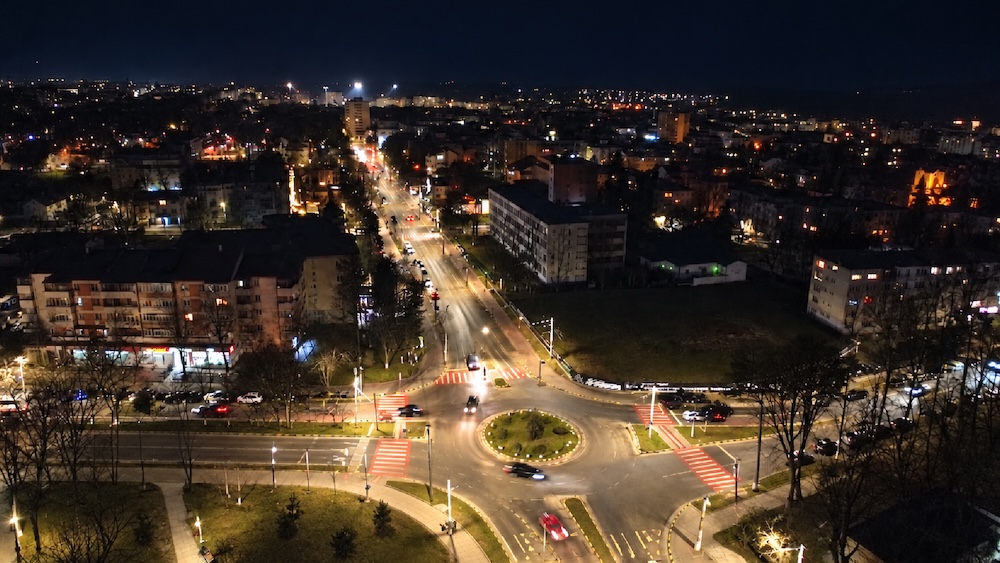
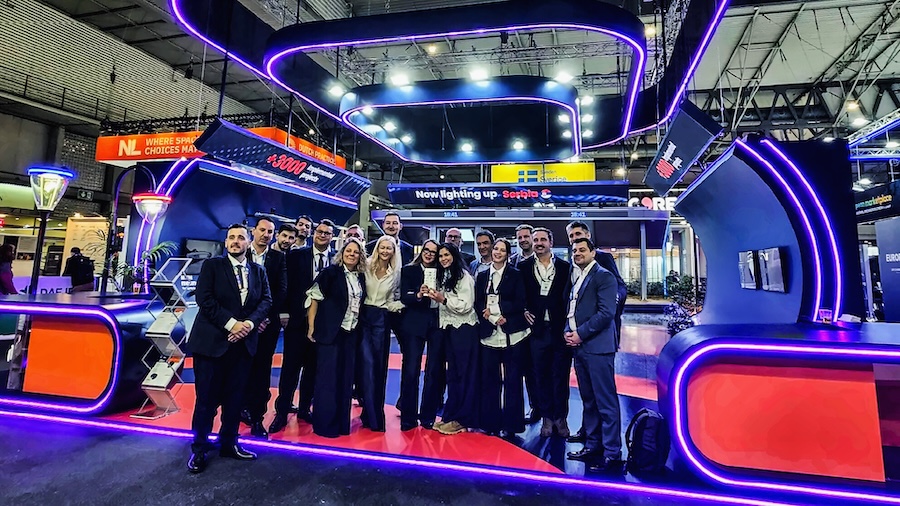
Winner of the Energy & Environment category at the 2026 World Smart City Awards in Barcelona, URBIO is using intelligent street lighting to cut electricity consumption while turning an overlooked urban asset into a platform for connected cities.
When falling water levels disrupted electricity generation in Romania, some municipalities began switching off their streetlights at 8pm. In communities using URBIO’s intelligent lighting systems, the lights stayed on. For Alex Fenechiu, the company’s chief strategy & revenue officer, the episode showed how a seemingly ordinary piece of infrastructure can become essential to a city’s resilience.
Ask which type of powered infrastructure reaches furthest into a city and, he says, the answer is obvious. “The unanimous answer across the globe is always going to be street lighting.” Streetlights already reach almost every road and provide an electrical network that cities can build on. URBIO wants to turn that existing network into the backbone of a more responsive city.
“There is no such thing as a lack of budget for a solid business case, especially in the European Union.”
Alex Fenechiu, URBIO’s chief strategy & revenue officer.
The winning project, in Botoșani County, connected 30,766 LED luminaires along 923 kilometres of roads and achieved a 64.4% reduction in electricity consumption. “64.4%, by the way, is actually the lower end of what we normally deliver,” Fenechiu remarks.
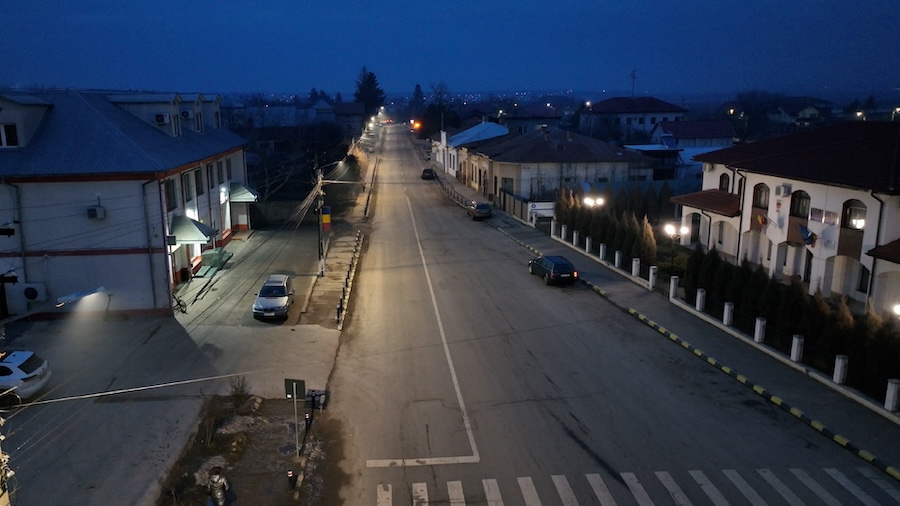
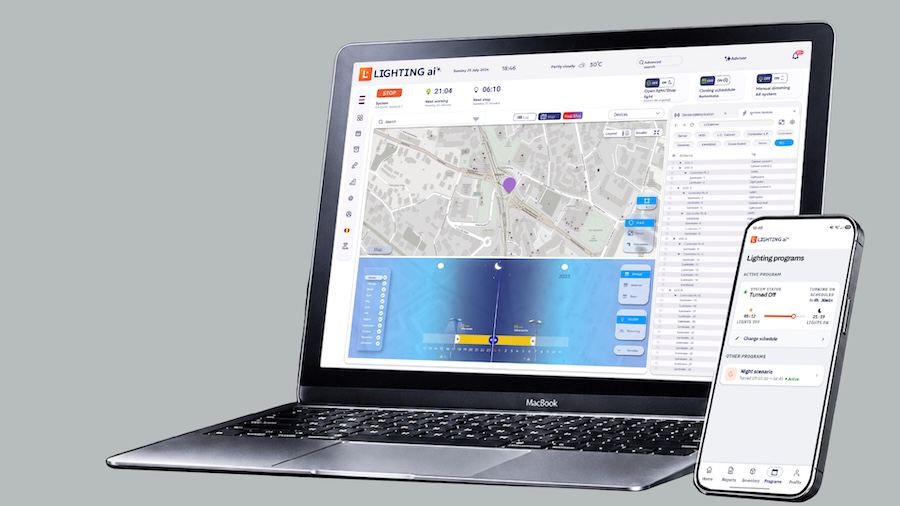
The first gains come from replacing old sodium lamps consuming around 250 watts with LEDs requiring roughly 80 to 85 watts. The more interesting innovation is URBIO’s Lighting AI platform, recently upgraded to version two. Drawing on connected sensors, it adjusts illumination as traffic changes or weather deteriorates, rather than following a fixed timetable. On an empty street, lighting can fall to 20% of installed power. The intelligence lies in deciding when that reduction is safe and when full brightness is needed.
The same network can help cities respond to problems they might otherwise discover too late. In Romania, URBIO’s technology identifies fallen trees obstructing roads. In a UAE community, sensors detect rainwater collecting where it should not and alert maintenance teams. Weather stations also provide local climate data, allowing authorities to compare conditions across neighbourhoods and assess whether policies such as low-emission zones are producing measurable results.
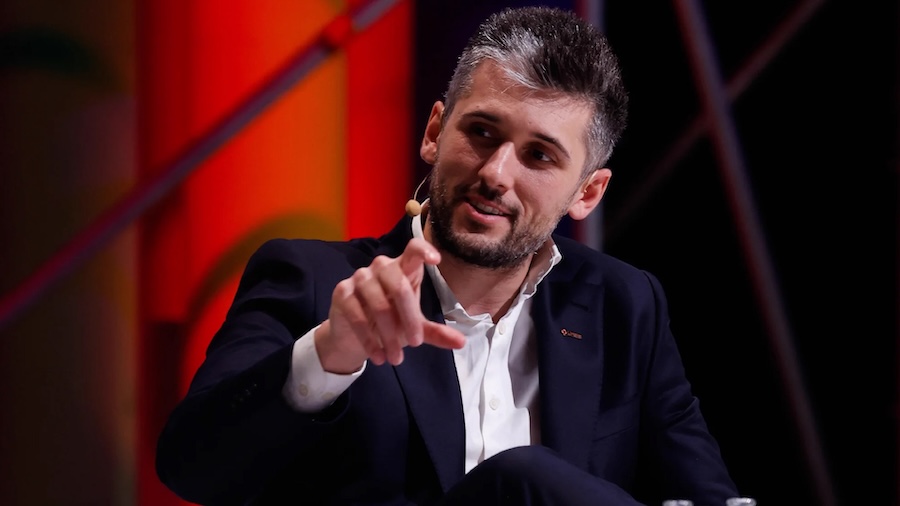
Nor, Fenechiu argues, is money necessarily the obstacle. “There is no such thing as a lack of budget for a solid business case, especially in the European Union,” he says.
The company is moving quickly. Fenechiu puts its output at approximately 300 projects in the past 18 months and estimates 2026 revenue at €75 million to €78 million. After organic annual growth of around 30% to 40%, he says he would be surprised if the business were not doubling in 2028 due to continued international expansion. URBIO has in recent years expanded to Montenegro, Greece, Spain, the UAE, Bulgaria and Saudi Arabia.
The next frontier is maintenance through robotics and AI, and Fenechiu has bold views on how it will change.
Fenechiu moved to London aged 13 and remembers the awkwardness of arriving at a new school. He jokes that he sounded “like Borat”, and recalls classmates making fun of the way he spoke. That experience informs his pride in what URBIO has achieved. The company emerged from northeastern Romania, a region rarely associated with global technology leadership, and he points to Daniel Dines and UiPath as proof that Romanian businesses can change international perceptions.
That is why the award in Barcelona matters to him beyond its commercial value. “The real pride for me is the fact that we’re proving to everyone around us that you can do it. And that might lead others to try!” he says.
Where should cities invest first?
Get the basics right. If you can have savings of more than 70% in your electrical usage for your street lighting, I cannot figure out any reason on planet Earth why you wouldn’t be doing that day in and day out. And the money is there. If nothing else works, we will gladly finance these projects ourselves.
What drew you to this industry?
I come from investment banking and technology for banks. When I looked at the return on investment in smart cities, it blew my mind. I have never seen figures like that. And software alone is not that interesting to me anymore. Anyone can build it. Software plus hardware that works in the field, works during a storm, works in case of military conflict, and that changes people’s lives daily… That’s a challenge that I find fascinating at the moment.
How far could AI transform the way cities operate?
Within 10 years, I believe 85% of dangerous manual work will be robotised. Think about what that means. A technician no longer has to climb a pole in a storm or put themselves at risk to keep a city running. We are already investing heavily in AI robotics, and thousands of our partners are recording how they install and maintain luminaires so machines can learn from the people doing the work today. But that is only the beginning. I think we are seriously underestimating how much transport is about to change. Take drones. Are they going to stop in a dock and sit there for four hours to charge? I very much doubt that. Cities already have poles and luminaires everywhere. Imagine that network helping to power the next generation of transport.