

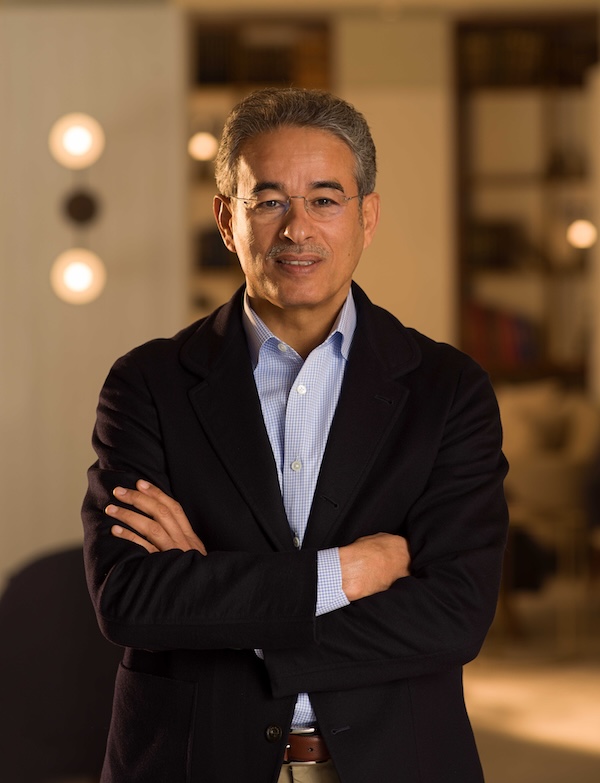
Mohamed Alabbar grew up in a palm-leaf-roof home in Dubai, the eldest of 13 children in a modest and loving family that shaped his discipline, resilience, and ambition. He went on to build the world’s tallest tower, deploy billions across four continents, and reshape skylines from Dubai to Belgrade. He is not finished.
When people ask Mohamed Alabbar the meaning of what he has achieved—the towers he built, the billions he has deployed, the 20 countries where he operates—he tells a story: A child stands at the base of the Burj Khalifa, looks up, and smiles. “That image,” he says, “tells that child they belong to a civilized country, and that they can dream bigger.” For Alabbar, who grew up in a low-income family in Dubai, that image is not marketing. It is the whole point.
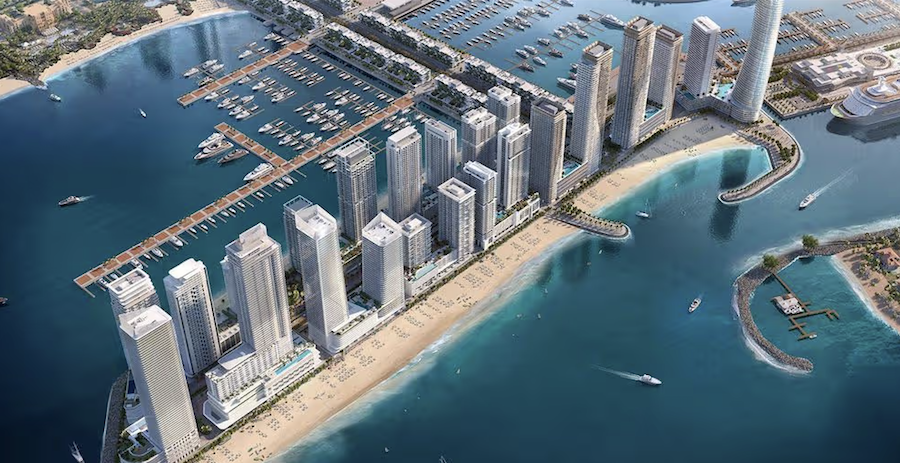
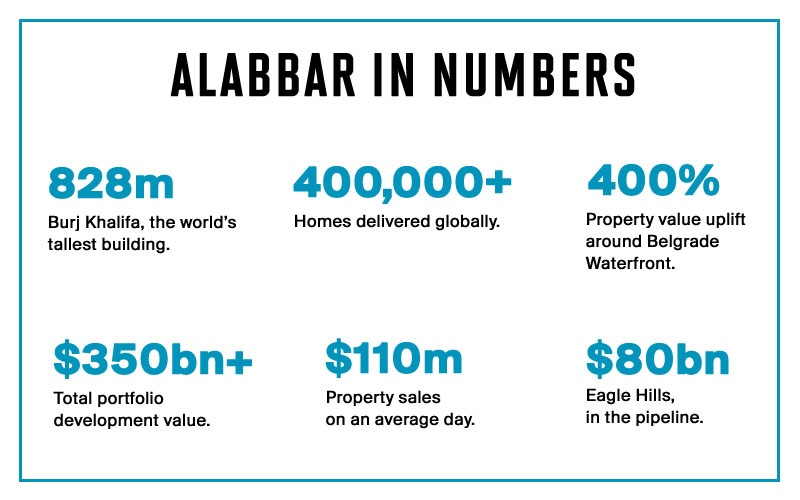
Alabbar founded Emaar Properties in 1997 with a vision that bordered on the audacious. Dubai was still a small trading port, and nobody had built anything close to what he was imagining. Under his leadership, Emaar delivered Downtown Dubai, anchored by the Burj Khalifa—at 828 meters, the world’s tallest building—and the Dubai Mall, the planet’s most visited retail destination. The company has since become one of the world’s largest developers.
But scale alone does not explain the Emaar story. What built the brand was something quieter and more demanding: a perfectionist’s refusal to treat a home sale as merely a transaction. Every detail is treated as a test of character. “We are selling homes to families,” he says. “That is sacred. If a customer has a problem 10 years later, I still want us to fix it. We made enough money already. Reputation matters more.”
What separates Alabbar from the generation of builders who rose alongside him is what happened after his Dubai projects. Where others consolidated, he accelerated. He founded Eagle Hills—an Abu Dhabi-based real estate company now operating across four continents—on the conviction that the world’s most undervalued places are not the ones without potential, but the ones without a believer.
“I am training an army of 12 AI agents. The possibilities are limitless.”
Mohamed Alabbar, founder of Emaar and Noon
“I walked through Tirana [Albania],” he recalls, “and I saw beautiful, kind, welcoming people. I said: ‘Let us give it a try.’” Albania was a market others would not risk; when he arrived in Serbia, the economics were similarly challenging. Both became defining successes. Montenegro is next. Alabbar’s logic is consistent: Find the country whose leadership is trying hardest, go before the crowd arrives, and build something that outlasts the investment cycle.
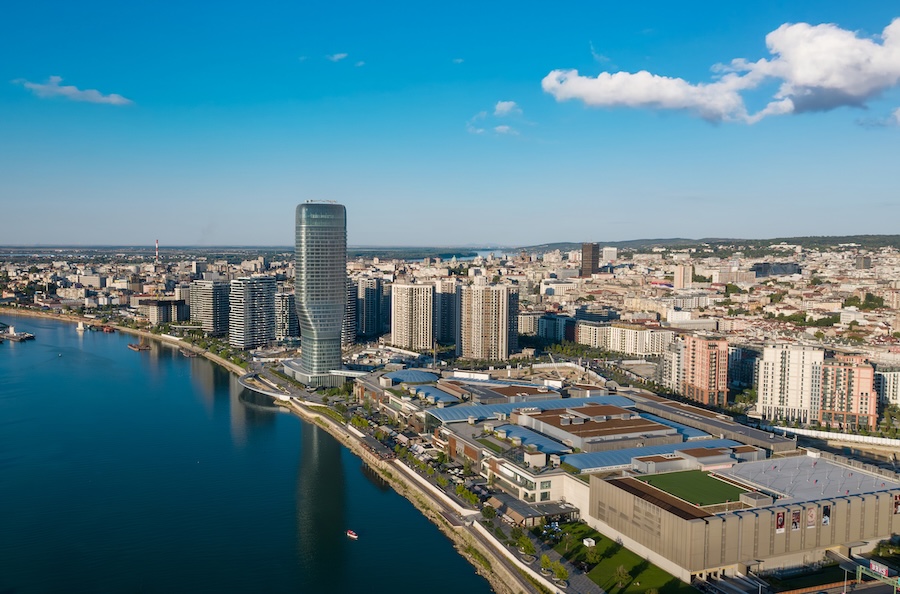
For investors, the opportunity follows a clear pattern. Emaar moves first, builds the infrastructure, and creates a market where one did not exist. Belgrade hosts the proof of concept. The waterfront development Alabbar built there drove up surrounding property values by 400%. “We did not come to extract,” he says. “We came to build.”
That philosophy reaches beyond economics. “You cannot only arrive in a country to extract profit,” he says. “You must become part of the community. You must give back more than you take.”
Alabbar’s appetite for risk extends well beyond real estate. In 2017, he launched Noon, the Arab world’s first homegrown answer to Amazon, backed by Saudi Arabia’s Public Investment Fund. Today, Noon is a regional e-commerce leader. Alabbar has since added Zand, one of the world’s first fully digital banks to offer both retail and corporate banking, to the portfolio.
Alabbar’s worldview is inseparable from that of the UAE itself: restless, ambitious, and unwilling to believe success is permanent. Fourteenth-century philosopher Ibn Khaldun warned that civilizations begin declining the moment they believe they have arrived. Alabbar says the UAE’s leadership has never allowed that mindset to take root. Neither has he.
Alabbar, 68, is training an army of 12 AI agents to analyze his correspondence, process his speeches, and learn the architecture of his thinking.
Perhaps his most revealing admission comes when asked what success looks like now. “My dream in high school,” he says, “was to own a bicycle one day.” He pauses. “God gave me far more than that.” Then comes the question that still drives him across continents, towers, and billion-dollar bets. “What are you going to do next?”
Why the UAE wins global capital
“The country has spent years building every layer required for long-term confidence: regulation, infrastructure, quality of life, healthcare, education, and progressive policies. More than 200 nationalities live and prosper here together. But ultimately, investors themselves decide whether they trust you. The UAE managed to create that trust. That does not happen overnight.”
Why he invests where others hesitate
“When we invest internationally, it is not only about making money. It is about supporting partners and building relationships. I see leadership trying hard to move a country forward, and I believe they deserve support. Every destination deserves its Mayfair or Beverly Hills. Every community deserves a place it can point to and say: We belong to something great.”
As published in Fortune magazine.