




With almost entirely clean electricity and Brazil’s only lithium production, Minas Gerais is making a serious case to investors racing to build the infrastructure of the AI economy.
Artificial intelligence has an electricity problem. A Brazilian state better known for its gold mines and coffee plantations believes it has part of the answer.
As technology giants hunt for the power to run ever hungrier data centres, Minas Gerais offers renewable energy at scale alongside the minerals the energy transition depends on. Already Brazil’s third-largest state economy, accounting for approximately 9% of national GDP, it represents a substantial market in its own right. For investors accustomed to looking first at São Paulo and Rio de Janeiro, there are good reasons to look further.
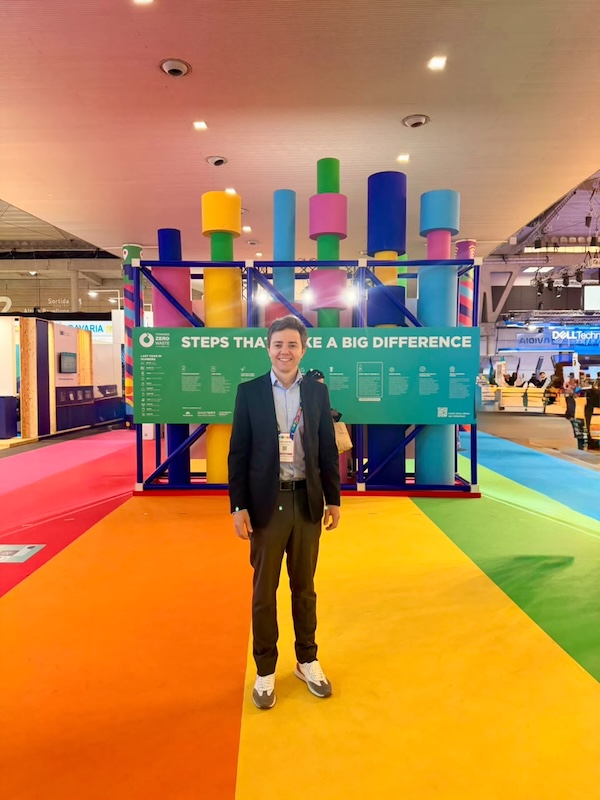
Gustavo Garcia, Director of Management and New Business at Invest Minas, the state’s investment promotion agency, arrives at Barcelona’s Smart City Expo with a clear message. Brazil’s next wave of industrial growth could come from a region many international companies have yet to explore.
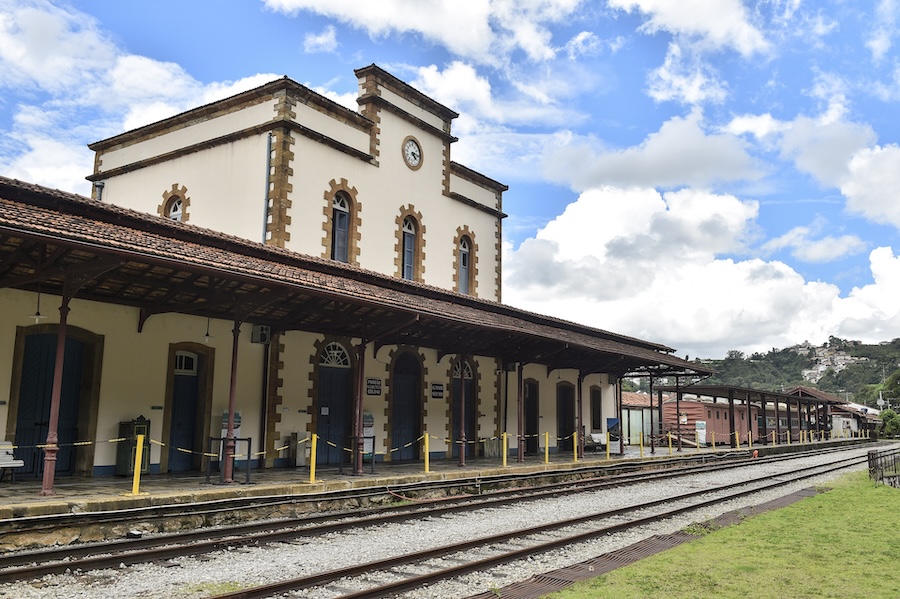
“We have enormous opportunities across our 853 municipalities, many of which remain largely unknown internationally,” he says. “Our ambition is to connect those opportunities with companies looking for competitive locations and reliable energy.”
The energy figures back him up. Minas Gerais leads Brazil in solar photovoltaic capacity, and Garcia puts the state’s electricity matrix at approximately 99.5% clean. For manufacturers under pressure to decarbonise, access to renewable electricity can increasingly influence where a factory gets built.
“Clean energy is opening an entirely new generation of investment opportunities for Minas Gerais.”
Gustavo Garcia, director management & new business, Invest Minas
The ground beneath the solar panels matters just as much. Minas accounts for more than half of Brazil’s processed iron ore production and is the country’s only lithium producer. Its Lithium Valley, in the Jequitinhonha region, is attracting interest from governments and manufacturers seeking alternatives to the concentrated global supply chains for battery materials.
Extraction, however, is only part of the picture. Minas has a substantial automotive industry and sophisticated manufacturing base, while Belo Horizonte has developed into an important centre for research and technology. Its location provides access to Brazil’s principal economic hubs, with a sizeable consumer market on its doorstep.
What particularly interests Garcia is where clean power meets artificial intelligence. The global race to build data centres has intensified competition for sites capable of delivering enormous quantities of reliable electricity, and Minas intends to capture its share.
“Initially, we believed our renewable energy advantage would be enough to attract major technology companies,” he recalls. “Then an investor asked how much electricity we could deliver to a specific location within six months. That changed our approach completely. We realised that understanding precisely what an investor needs, and where we can deliver it, is essential.”
Invest Minas began working with electricity providers to identify municipalities capable of hosting data centres, assessing grid capacity and infrastructure location by location. Several projects are now in preliminary development or financing discussions, although Garcia acknowledges that abundant renewable resources do not guarantee immediately available power. Matching an investor’s requirements to a viable site has become central to the agency’s strategy.
The same practical thinking sits behind Invest Minas Digital, a platform designed to make opportunities across the state’s 853 municipalities more visible internationally. The agency helps local authorities identify their strongest assets and present credible propositions to investors.
A recent negotiation with Chinese cable manufacturer ZTT illustrates the approach. Invest Minas presented five potential sites, and the company selected the location best suited to its operations. Its identity remains confidential pending an official announcement, but the decision demonstrates how targeted investment promotion can turn a municipality’s previously overlooked assets into a commercial opportunity.
“We want companies to understand that they have a partner here,” Garcia says. “Whether they are building a factory or entering the Brazilian market, our role is to make that process easier and help turn an investment decision into a successful operation.”
That support extends from site selection and permits to introductions to local suppliers and customers. Invest Minas has identified 14 priority countries, including China, the United States, Spain, Germany, France and the United Kingdom, tailoring its approach to the industries and capabilities of each.

Companies planning to stay will also discover a state Brazilians celebrate for its cuisine, coffee and historic towns, with universities supplying a substantial pool of skilled graduates. For businesses investing over decades, the ability to attract good people matters almost as much as energy costs.
For Garcia, the meaning of long-term investment has recently become personal. Four months ago, he became a father to a daughter, Luisa.
“When we discuss investment, we often talk about 2050 or 2060 as though those years are very distant,” he reflects. “Now I think about how old Luisa will be and the world she will inherit. Behind every investment are families hoping for better jobs and a better future. Becoming a father has made that responsibility much more real to me.”
For a state whose prosperity was once measured by what it extracted from the earth, the greatest opportunity may now lie in what it can build above it, and in the lives that investment can change for generations to come.