
“What if every venue tells you what it wants?”
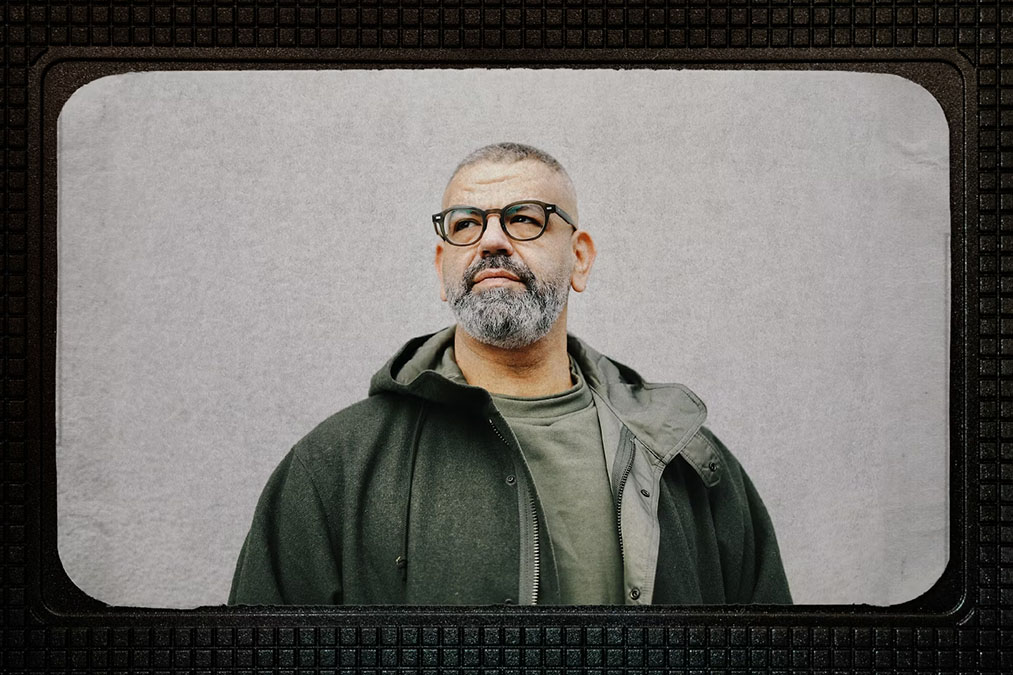
It is a question that comes naturally to Ahmad ‘Baloo’ Alammary, DJ, producer, and chief creative officer MDLBEAST, the company that has discreetly and then very loudly reshaped Saudi Arabia’s modern music landscape. Born in the United States and raised in Riyadh, Baloo came of age in the Kingdom’s underground scene long before large scale festivals were imaginable, building a reputation through private gatherings, regional gigs, and an unwavering belief in music as culture rather than spectacle.
This wasn’t even possible as a dream back then” he says. “You couldn’t really dream this. It wasn’t realistic in the context that we were living in.”
Today, he sits at the intersection of creativity, infrastructure, and strategy, responsible not just for what happens on stage, but for how entire experiences are designed, sustained, and scaled.
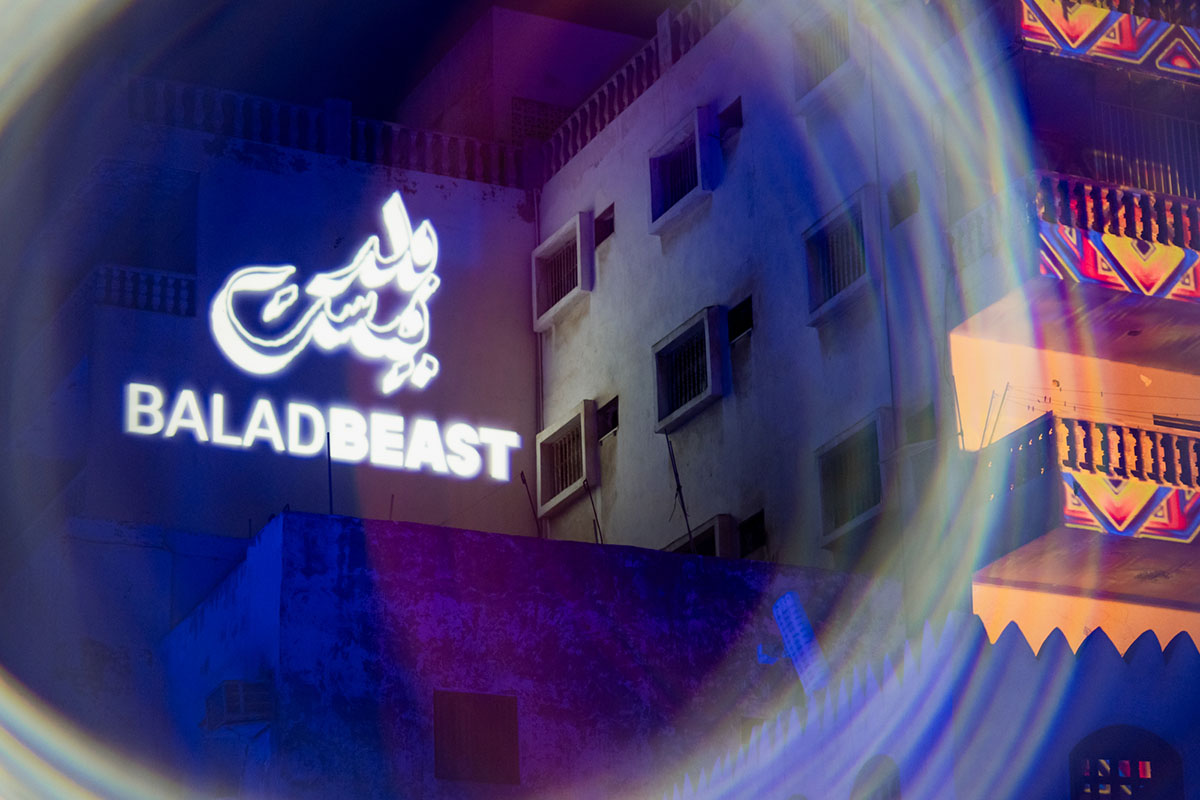
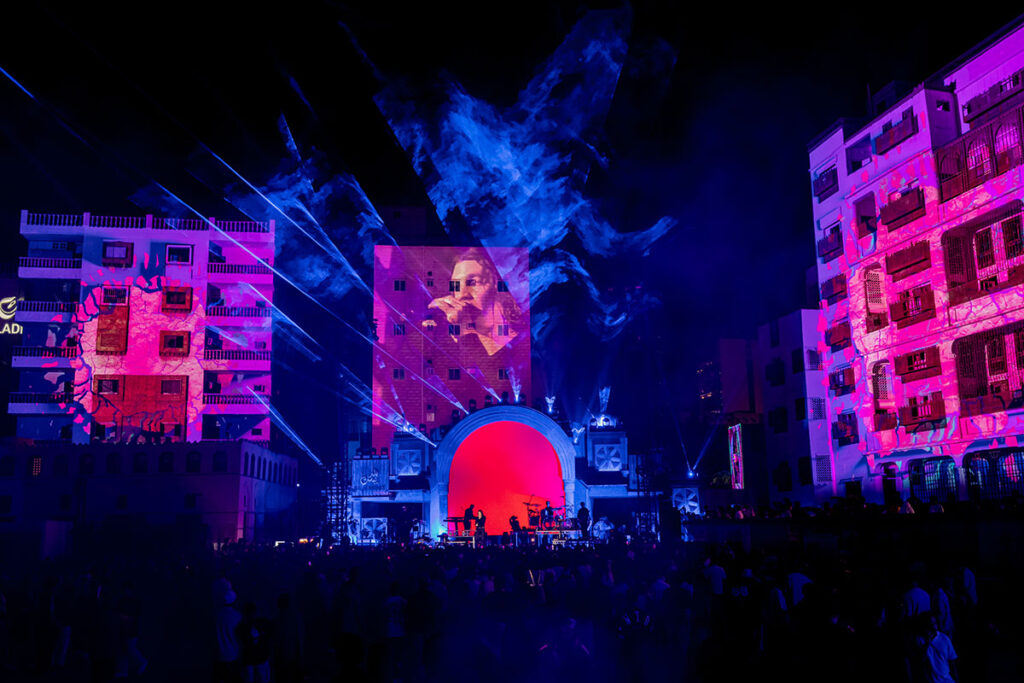
That perspective is essential in understanding Balad Beast, MDLBEAST’s annual festival set inside Al Balad, a UNESCO World Heritage site and the historic heart of Jeddah. Unlike the company’s flagship mega festival Soundstorm, Balad Beast was never conceived as a spectacle measured by size alone. It was designed as an experiment in context: what happens when contemporary global music is embedded inside a living heritage district rather than placed on a blank field.
Over two sold out nights, more than seventy artists performed across four stages woven into Al Balad’s narrow streets, courtyards, and squares. The district, never designed for crowds, basslines, or global headliners, became a moving network of sound, light, and people. As audiences drifted between Bab, Omda, Souq, and Roshan stages, it became clear that this was not a festival site to be navigated. It was a neighbourhood to be experienced.
To understand why Balad Beast feels so different, it helps to understand what it is not.
It is not Soundstorm. Soundstorm is MDLBEAST’s statement of scale, built around spectacle and global visibility. It is designed to impress from a distance. Balad Beast operates on another frequency. Smaller by design, more intimate by intention, and more culturally embedded by necessity, it functions closer to a curated street festival than a conventional mega event. The production is world class, but it never dominates the setting. Instead, it frames it.
This year’s lineup reflected that balance between international recognition and local resonance. On the opening night, Playboi Carti delivered his first ever performance in Saudi Arabia, opening with “Timeless” as dancers in traditional attire reshaped the visual language of global hip hop. Alesso closed the main square with a high energy set built for bodies already in motion, while Solomun and Ben Böhmer brought emotional depth and house driven intensity to the Omda Stage.
Night two sustained the momentum. Shaggy transformed Bab Square into a mass singalong. Tyga closed the festival at full throttle, while Franky Rizardo, Pawsa, and Loco Dice ensured the underground remained central to the narrative.
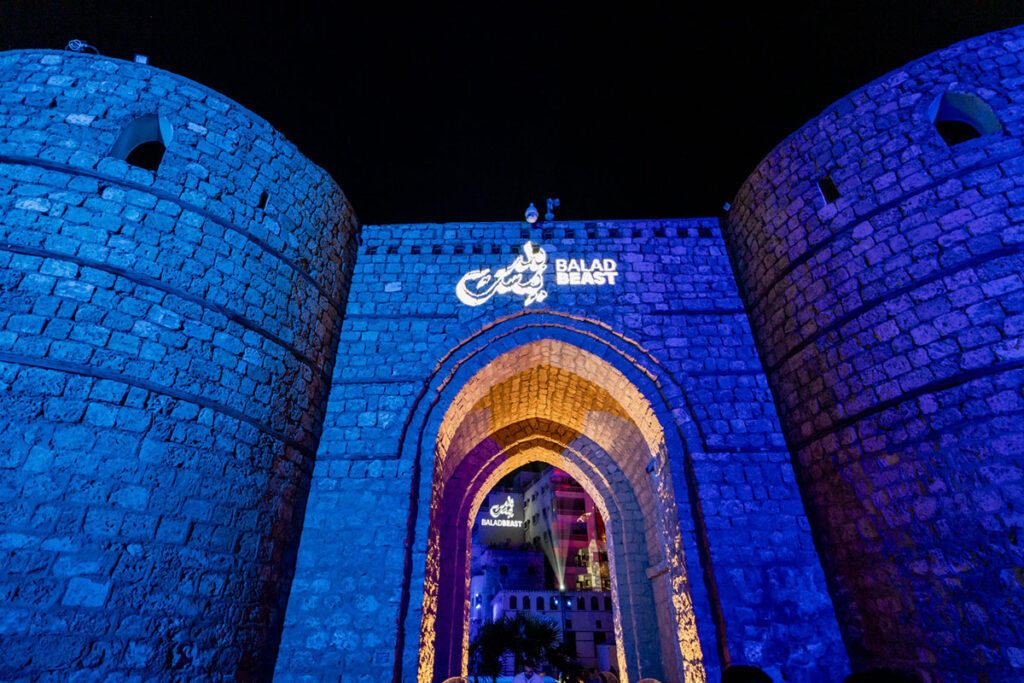
Yet the reason Balad Beast leaves such a strong impression has less to do with headline names than with the way the city itself refuses to become a passive backdrop.
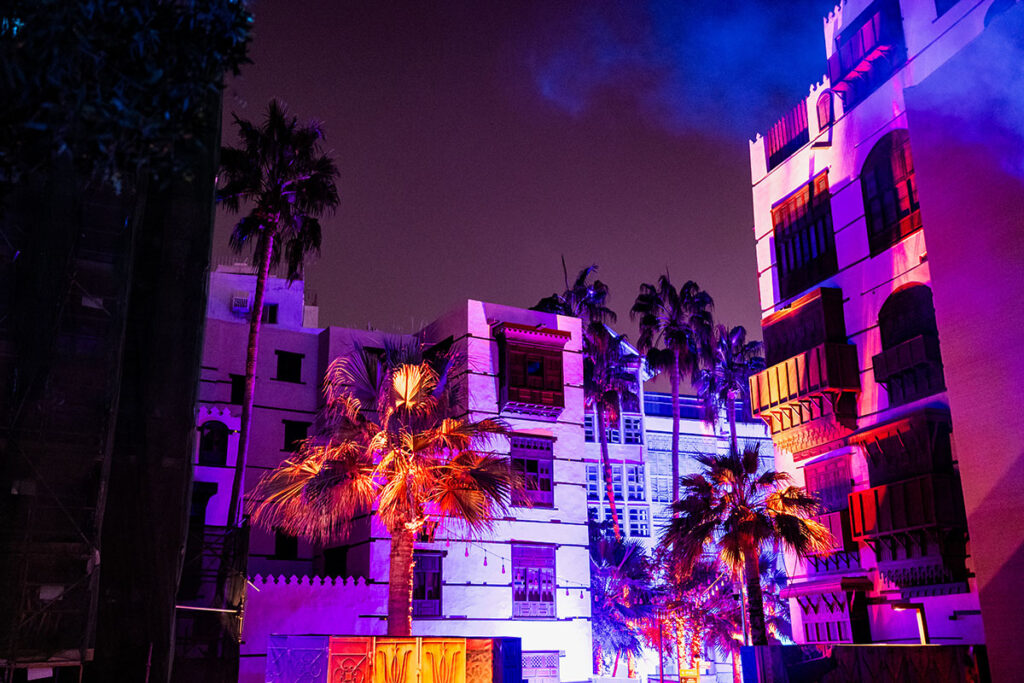
Baloo describes Al Balad as “delicate” and “precious,” and he means it literally. Sound and vibration are tested. Structural integrity is monitored. Locations are chosen based on engineering strength. “We adapt to the space, not the other way around,” he explains. “We protect the bones first.” Only after that comes creativity.
That approach produces something rare: a festival that feels both meticulously engineered and entirely natural. Baloo refers to it as “projecting Balad onto Balad,” a phrase that initially sounds like creative shorthand until you see everyday details transformed into monumental visual statements. Market textures become architectural patterns. Local references are embedded into projections that reward those who recognise them. It is not about importing a global festival aesthetic. It is about amplifying what is already there.
More than anything, Balad Beast functions as cultural infrastructure.
Baloo is clear that he measures success not by ticket sales or social metrics, but by long term outcomes. “When local artists get picked up in Europe or the US,” he says, “that’s the sign.” For him, the festival is part of a wider system designed to incubate talent, build careers, and create sustainable creative pathways.
Looking ahead, his ambition is explicit. “In five years, I see Saudi as a global case study for building a music economy,” he says. “How to incubate talent. Export talent. Build experiences from culture. Everything we do is ours. Our design. Our interpretation.”
“Balad Beast plays a very specific role. It’s where heritage, culture, and community intersect most visibly. It’s where we explore how music can live inside cities and neighbourhoods, not just festival grounds.”
Baloo, chief creative officer MDLBEAST
You hear that evolution most clearly in the voices of artists who experienced the scene before it had platforms, before it had audiences, and before it had public legitimacy.
Dish Dash, the pioneering electronic duo formed by brothers Hassan and Abbas Ghazzawi, remember a time when loving music often meant hiding it.
“If you told us in a million years that this would happen, we would laugh,” they say. “We weren’t trying to achieve anything. We weren’t chasing success. We just loved music. We just wanted to play music.”
In the early years, that love was confined to back rooms.
“At weddings, they would put us in a room. Me and Hassan. We couldn’t see anything. Girls would come knock on the door asking for requests. ‘Please play this track.’ It was a wedding, but we were locked away.”
They were providing the soundtrack to celebrations they were not allowed to witness.
“And when you see that kind of change,” they continue, “especially in a place that’s so connected to culture, it makes you very proud to be Saudi. To host an event like this, at an international level, in Al Balad, is something special.”
For Dish Dash, Balad Beast is not just another booking. It is proof of transition.
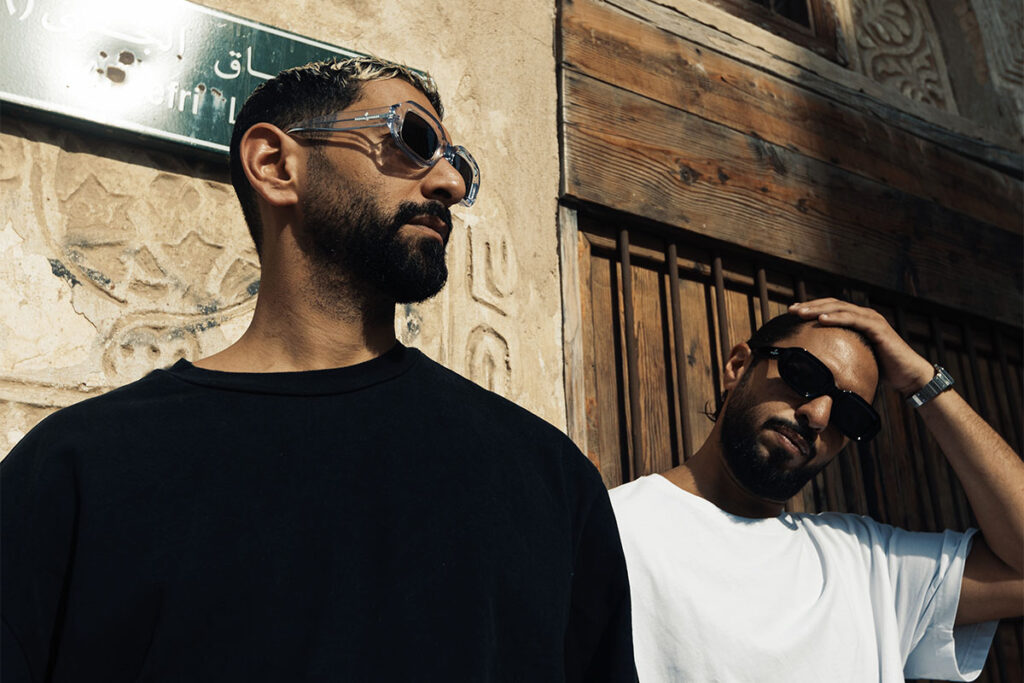
“For us, Balad Beast is one of the top festivals,” they add. “People tend to think the Middle East has to be about massive numbers. But this is more boutique. It’s a unique experience.”
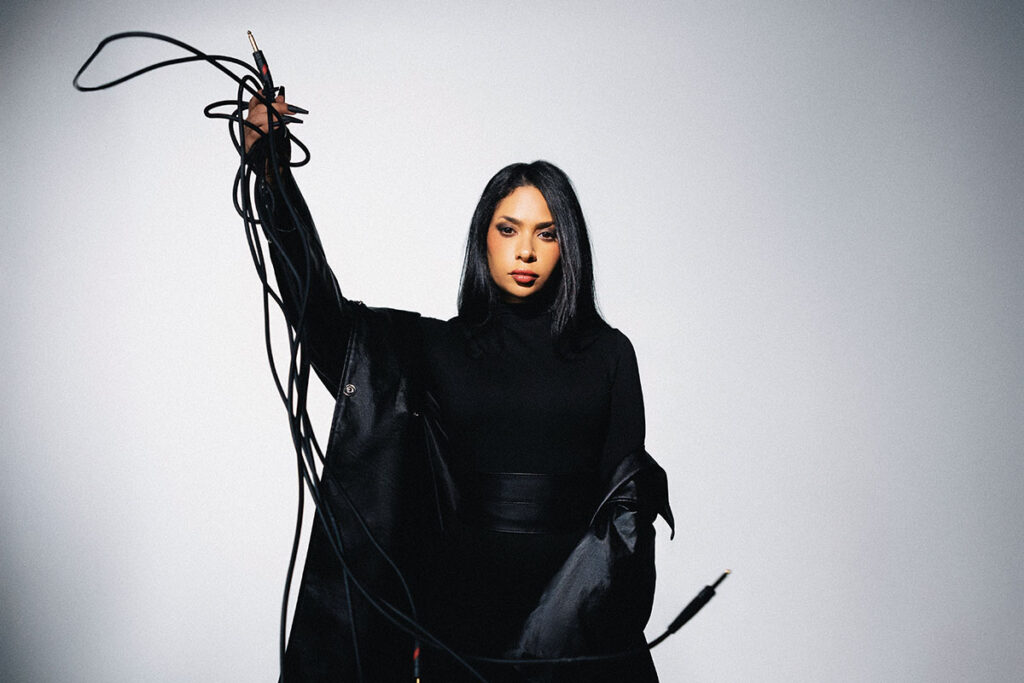
That same trajectory appears in the story of Saudi DJ and producer Cosmicat, one of the most distinctive voices to emerge from the Kingdom’s electronic scene, and one whose relationship with Al Balad is deeply personal.
“Al Balad is a UNESCO heritage site, and it means a lot to me personally,” she says. “It’s a piece of history. It’s an artwork. It’s a place I used to go to with my father when I was younger. My grandparents’ house was there. We would go on holidays. Sometimes for Friday family lunch.”
For Cosmicat, performing at Balad Beast is not simply another career milestone. It is a return. “Having the festival there feels like a full circle moment,” she reflects. “To emerge from that place, go out to the world, work and learn, and then return again as an established artist and serve my purpose in life.” She describes it as experiencing change “while looking history right in the eye,” embracing the future while standing in the heart of memory. “Hands down, it’s my favourite festival,” she adds. “It’s not about playing sets anymore.”
Her identity as an artist has evolved alongside the country’s cultural transformation. “I’m a composer,” she explains. “There are many feelings I want to share with the world. Art expression was the first language I learned.” That philosophy now extends beyond performance into sound design, installations, long term creative projects, and developing music education content in Arabic for young artists who, like her, are self taught.
For Cosmicat, Vision 2030 is not an abstract framework. It is lived experience. “I relate to that shift so strongly,” she says. “Because I witnessed the change first hand. It changed my life. It impacted everyone’s life around me. I’m glad we are taking these steps, and I’m so excited for the future.”
International perceptions have been slower to evolve. Artists still encounter outdated assumptions abroad, questions about whether Saudi even has a club culture, whether women can perform. The response is no longer defensive. It is practical. They invite people to Jeddah. They bring people to Balad Beast. They let the experience speak.
Balad Beast is not trying to become Berlin, London, or New York. Baloo is almost impatient with that comparison. “We’re not trying to catch up,” he says. “We’re not competing like that.” Instead, he describes a scene shaped by Saudi hospitality, humour, pop culture, and local interpretations of underground experience. It is not copied. It is translated. Remixed. Reimagined.
Balad Beast is not proof that Saudi Arabia can host major festivals. That question has already been answered. It is proof that the Kingdom is learning how to build culture on its own terms, rooted in place, memory, and ambition. Standing in Al Balad in the early hours, surrounded by light, sound, history, and thousands of people who would not have been there a decade ago, it becomes impossible to reduce that experience to statistics or headlines.
Seeing is believing.
In Jeddah, believing sounds like techno, funk, house, underground experimentation, and a confident creative pulse that now belongs unmistakably on the global stage.