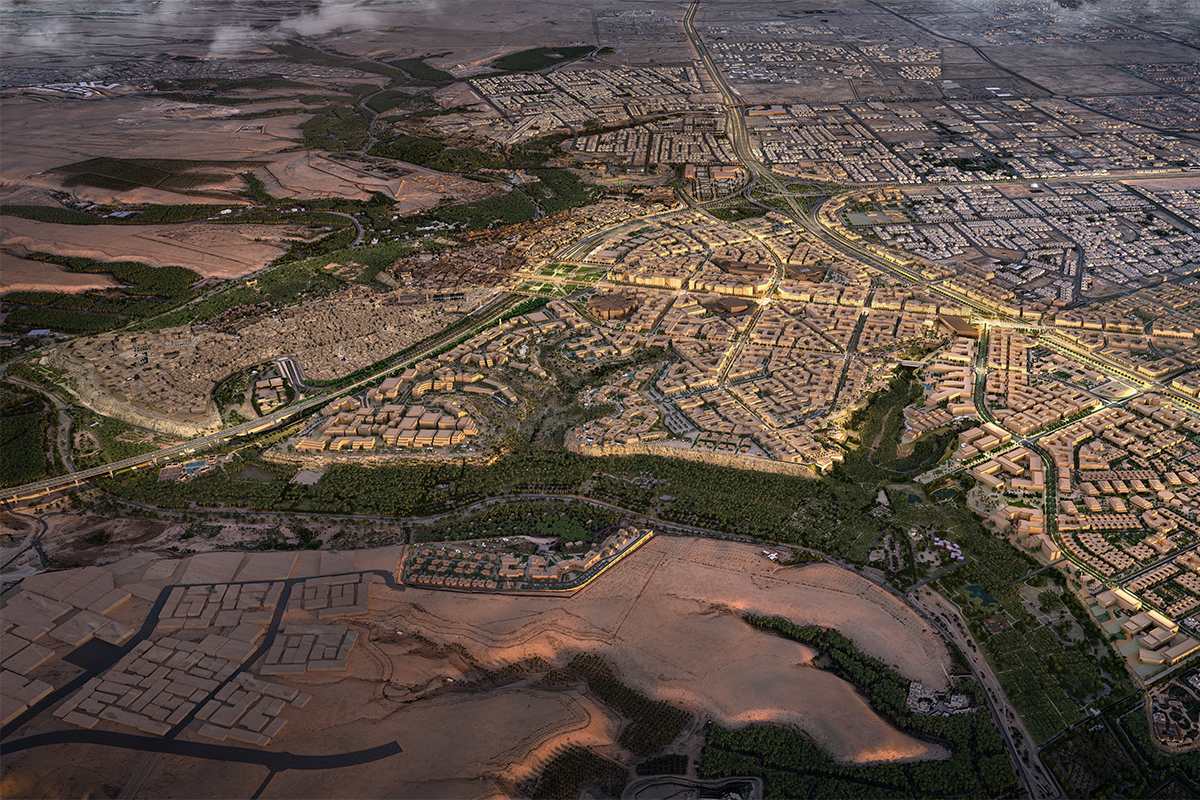

In the valley of Wadi Hanifah, on the western shoulder of Riyadh, one of the most ambitious urban projects on the planet is rising from the desert. Diriyah is not a district or a development in the conventional sense. It is a national statement built at giga scale, a fourteen square kilometre city anchored by the mud brick stronghold of At Turaif and driven by the cultural, social and economic momentum of Vision 2030, the Kingdom’s strategy to modernise its economy and open new opportunities for its young population.
Backed by a multibillion dollar investment programme and guided by the leadership of group chief executive Jerry Inzerillo, the project is defining a new global category of heritage led urban living while setting a benchmark for how Saudi Arabia intends to shape its next century. It stands alone in the world for its clarity of vision, its speed of execution and the scale of its ambition.
The masterplan rejects the familiar playbook of vertical skylines. Instead, Diriyah has been shaped around walkability, human scale and place making. Streets are narrow and shaded, courtyards replace boulevards, and the architecture nods to Najdi forms without slipping into nostalgia. It is a deliberate attempt to build a modern district that feels rooted rather than borrowed. Diriyah one and Diriyah two will bring more than eighteen thousand homes, thirty hotels and a significant retail footprint, all arranged around the world heritage heart of the project. Sustainability drives every decision, from water systems to materials, and the district has already been recognised internationally for its environmental framework while still in active construction.
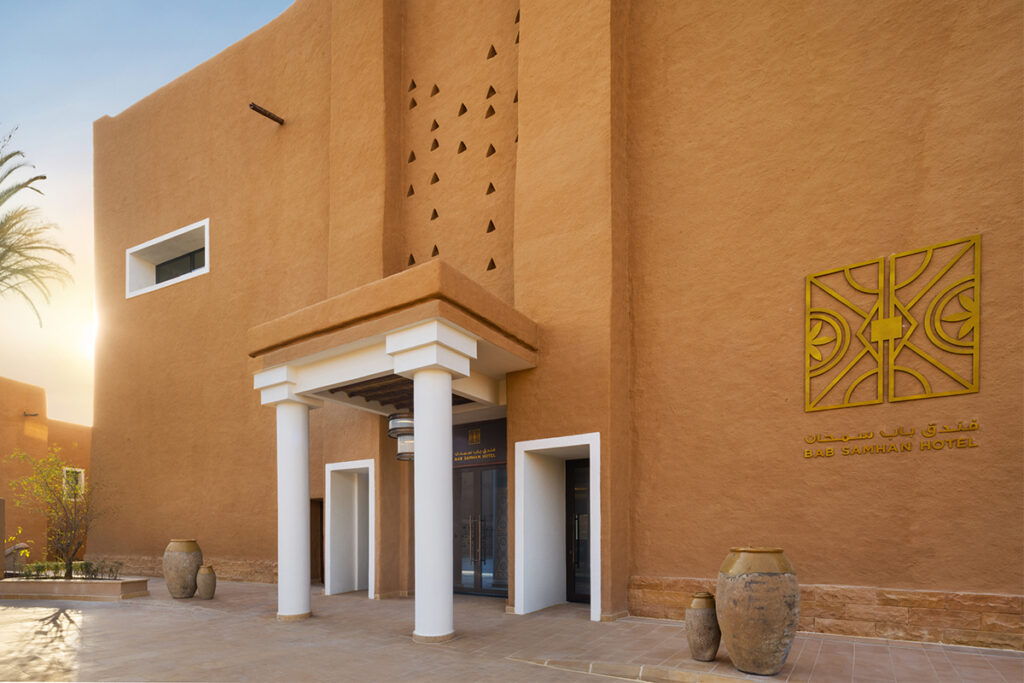
A large part of the engineering sits out of sight. A tunnel network beneath the city moves vehicles and utilities underground so that the surface can be given back to people. Landscape architects are reshaping the wadi with restraint, keeping its original contours while reopening long lost sightlines toward At Turaif. Contractors involved in the build point to the emphasis on training, safety and long term capability as a defining feature. Infrastructure in Diriyah is not designed for show. It is designed for longevity.
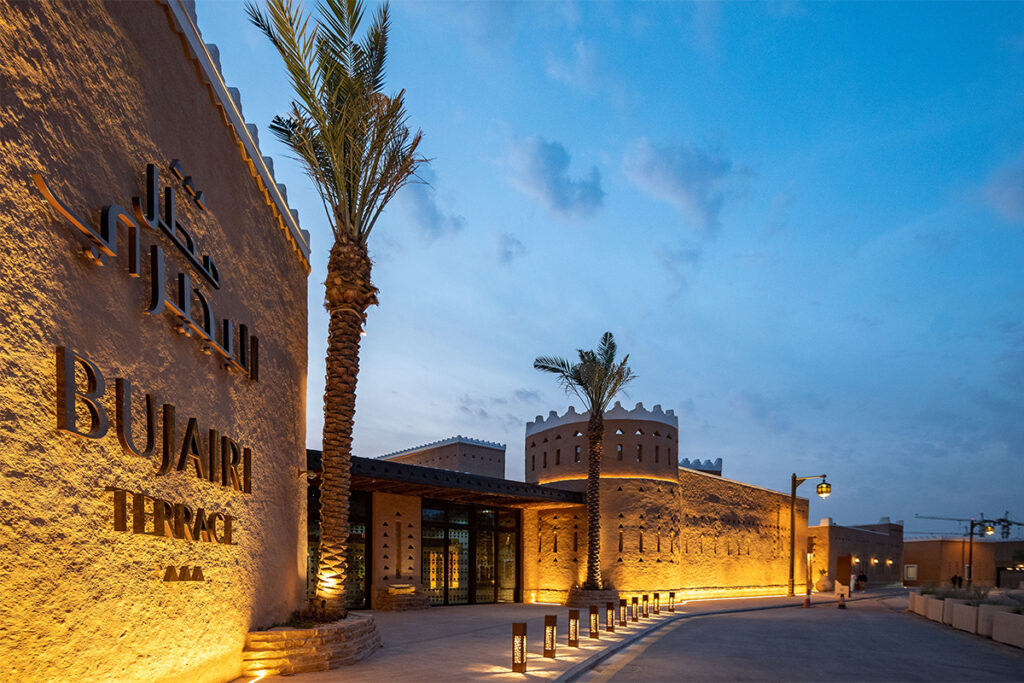
For visitors and residents, the first real glimpse of the lifestyle the city promises comes at Bujairi Terrace, a dining district that already functions like the social heart of Diriyah. More than twenty restaurants overlook At Turaif, from Saudi concepts reimagining regional cuisine to global names positioned at the same standard as London, Dubai or New York. It is curated with intent. Nothing here feels accidental or generic. The district signals the level of everyday experience Diriyah expects to deliver.
“Diriyah is not simply being built. It is being reclaimed. We are bringing a historic capital back to life and giving the world a new way to experience Saudi Arabia.”
As Nawaf Rajeh, executive director for development and innovation marketing
Further west, Wadi Safar expands that vision. The landscape is untouched in large parts, and development is deliberately low impact. Ultra luxury retreats, private residences and wellness driven spaces blend into the topography rather than rise above it. A championship golf course designed by Greg Norman and a world class equestrian and polo club sit at the centre, connected by trails that weave across the valley. Wadi Safar is positioned as one of the Kingdom’s most exclusive addresses, shaped for those who value privacy, nature and service without excess.
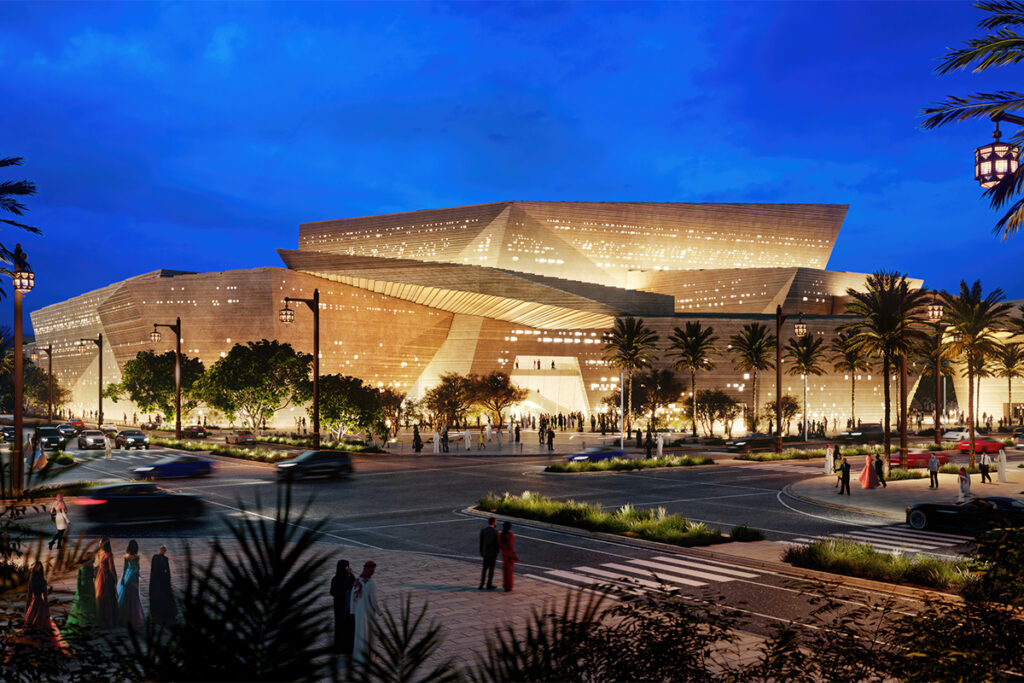
Residential neighbourhoods across Diriyah follow a similar logic. Homes are grouped in connected clusters with schools, mosques, workspaces and cultural venues within walking distance. Najdi tones and textures guide the exterior palette, while the interiors offer all the standards of a modern global capital with fibre connectivity, efficient cooling and integrated smart systems. The goal is to create a city where culture, community and work exist within steps of each other.
This human first intention runs throughout the project. As Nawaf Rajeh, executive director for development marketing, explains, “Diriyah is not simply a masterplan. It is a commitment to building a city shaped around people, a place that feels authentic to Saudis while inspiring to the world.” His view reflects a core principle of Vision 2030: build for citizens first, attract the world second.
Young Saudis are central to the plan. Training programmes for chefs, guides, hospitality staff, heritage specialists and digital creatives are expanding alongside the physical build. Diriyah is expected to create tens of thousands of high quality jobs in sectors that barely existed in the Kingdom a decade ago. The city is being designed with the next generation in mind, not only as a place to work but as a place to lead.
Heritage remains the anchor. At Turaif and the surrounding mud brick district sit at the centre of the masterplan, not as a museum frozen in time but as a living core. Restoration teams are rebuilding alleys and palaces using traditional methods and local materials, supported by lighting and landscaping strategies that respect the original fabric. As Sami Amin, executive director communications, puts it, “Diriyah is where Saudi Arabia tells its story in its own voice. Every part of the city communicates who we are and what we aspire to become.”
What emerges is a city built on cultural clarity and long term purpose. Diriyah is not a themed development or a visitor attraction. It is a functioning city with heritage, sustainability and premium living engineered into its foundations, an ecosystem designed to last. It is a place where families will live, where ideas will circulate and where the next chapters of the Kingdom’s story will be written in the light of the wadi.