
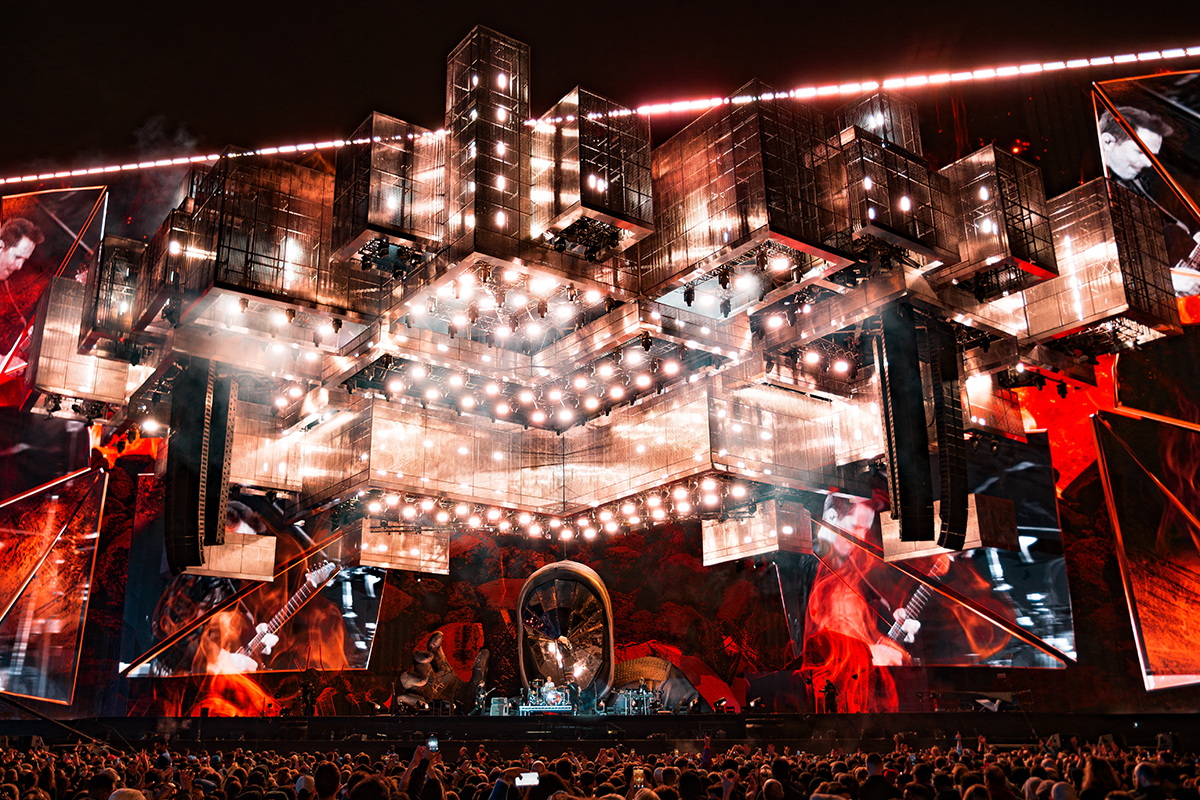
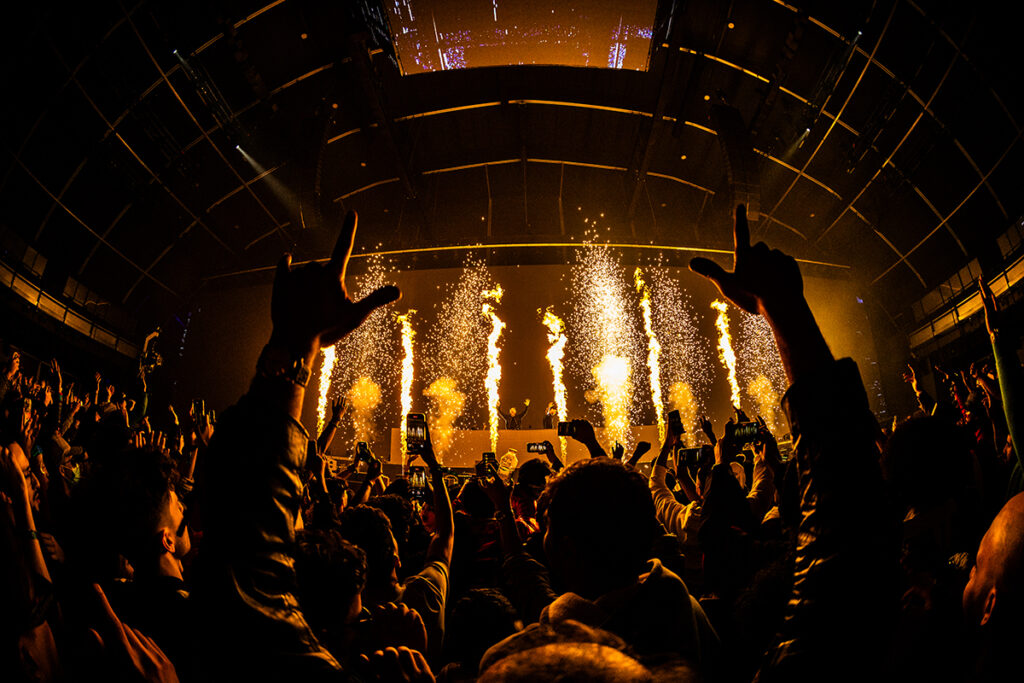
There’s a moment when Soundstorm hits critical mass—not when the first act comes onstage, but when the entire crowd syncs into one collective frequency. What MDLBEAST has engineered for 2025 isn’t just a supersized festival, but a deliberate cultural accelerant: a temporary city of sound that previews a future in which Riyadh becomes one of the world’s great music capitals.
It feels different now. More assured. More sophisticated in its design. MDLBEAST has stopped trying to convince anyone that Saudi Arabia belongs in the global music conversation. That argument is over. Now the focus is on shaping what that conversation becomes. Ahmad “Baloo” Alammary, the creative force behind Soundstorm’s evolution, defines it with absolute clarity: “A music city to me is a city where there is something happening on the music front at all times.” Not seasonal. Not occasional. Continuous.
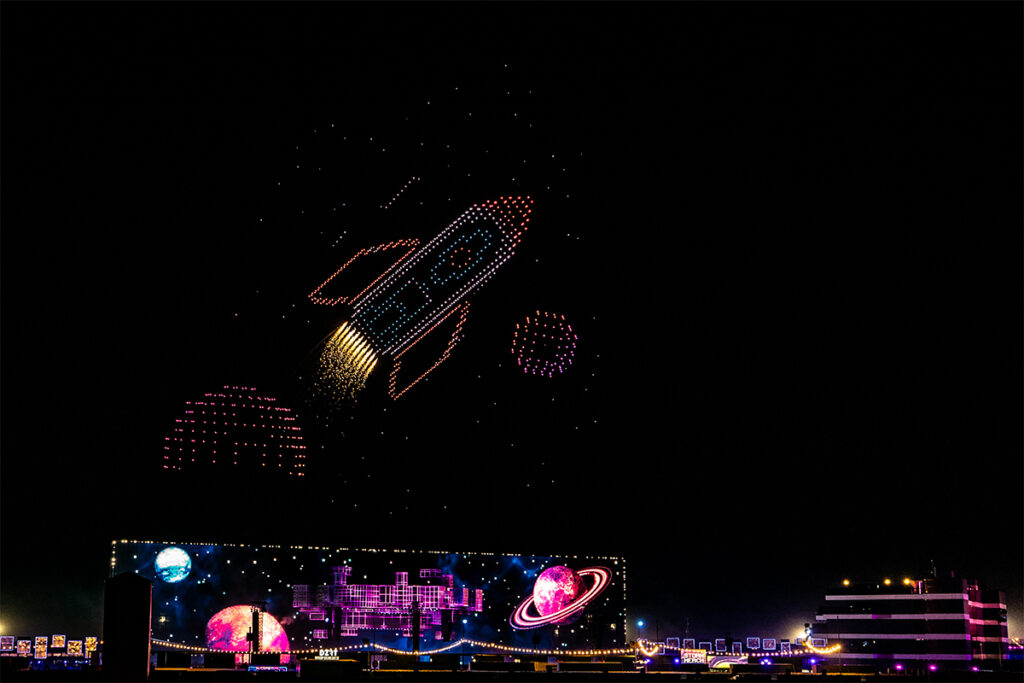
Soundstorm for 2025 is engineered with that idea at its core. Instead of simply adding more headliners or pumping up the stage count, the organizers have rethought the physical and social logic of how audiences move, connect, and discover. Baloo is explicit about the intention: “We wanted our audiences walking a lot less, creating an enjoyable experience filled walk from point A to point B at all times.” It sounds almost clinical—until you feel the result: the space becomes navigable, fluid, instinctively interactive. It becomes less like a venue and more like a living network.
“With Soundstorm we are building a music city in Riyadh that can live on beyond the storm.”
Ahmad “Baloo” Alammary, CCO, MDLBEAST
This is where the Vision 2030 alignment becomes tangible. You can talk about national ambitions in terms of GDP, tourism, entertainment, creative economy—but the true expression of those goals is the moment a Saudi teenager hears a local DJ perform a genre they’ve never encountered before. It’s the moment a visiting producer from London or Berlin hears a Saudi vocalist and silently marks them as someone to watch. It’s the quiet, electric circuitry of cultural exchange—the act of amplifying the unseen.
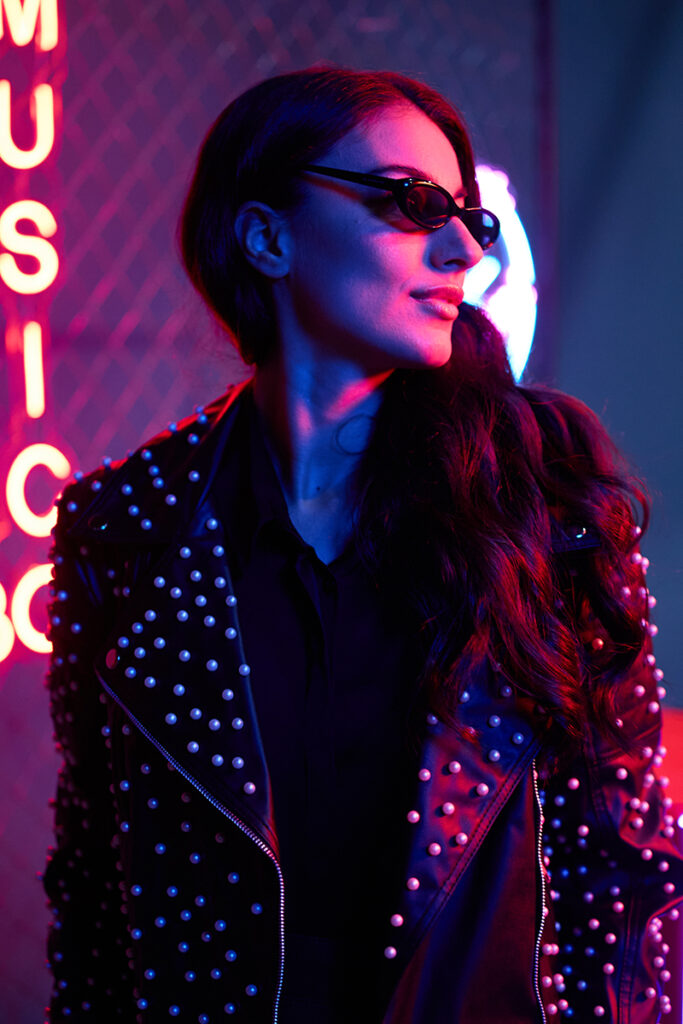
Baloo views Soundstorm as both mirror and engine. “With Soundstorm we really showed the rest of the country what was possible and what was achievable.” You feel that confidence from artists across the region—not gratitude, not novelty, but momentum. The local music scene is no longer asking for permission. It’s defining itself, on its own terms.
That shift is now shaping how the world views Riyadh. Global recognition is no longer aspirational—it feels like a natural outcome of scale, curation, and cultural direction. Baloo notes, “We are already recognized globally in the industry, but I would love to see a bigger international crowd in the audience.” And this year, the audience profile is evolving—more Europeans, more Americans, more Asians—driven less by curiosity and more by genuine cultural pull. Soundstorm isn’t just a destination event; it’s becoming a pilgrimage for those invested in the future of music.
What’s striking is that MDLBEAST isn’t merely importing global talent; it is cultivating domestic identity, nurturing artists from bedroom studios and underground sets into international-ready performers. Baloo describes the Saudi music landscape as “rich and the local variety of music is healthy and endless.” That’s not a slogan. That’s a community in motion. Some of the most unforgettable performances won’t be by global icons—but by emerging Saudi acts stepping into the spotlight and shaking up expectations.
Soundstorm has evolved from phenomenon into platform. If the early phase was driven by explosive visibility, the current one is shaped by strategic intention. MDLBEAST is building not just moments, but mechanisms: artist development pathways, year-round stages, collaborative spaces, and new models for audience-artist connection. The legacy isn’t the weekend. The legacy is what happens after. New venues opening. More live acts throughout the year. Labs of collaboration. Experimental nights. Open mics. Pop-up stages. The cultural muscle begins to deepen.
That’s the real story: Soundstorm isn’t building an event. It’s building the behaviors and expectations of a music city—and the confidence of a generation stepping into its own sound.
What defines a true music city in your mind?
A music city to me is a city where there is something happening on the music front at all times… whether it’s a concert venue, a café, even at homes.
What does Riyadh still need to reach that level year-round?
We’re just getting started! Think of cafés or lounges where you can have live music any day of the week… a café that has live bands playing every day, with up-and-coming local and regional DJs playing throughout every week.
What evolution this year are you most proud of?
We have added the feeling of intimacy while maintaining our stance as the biggest festival in the region.
How has Soundstorm influenced the wider Saudi music scene?
We really showed the rest of the country what was possible… seeing how quickly we can set up something of that scale is what has motivated people to join us in developing the Saudi music landscape to what it is today.
Looking ahead—what’s the frontier?
I would love to see a bigger international crowd in the audience… welcoming more people from all over the world goes hand in hand with tourism and Vision 2030.