




Nigeria’s investment story has always been loud. The difference now is signal over noise. In Lagos you can feel it in the pace of new build, in fiber spooling out from the city’s edges, in the quiet confidence of bank chiefs and founders who no longer pitch Nigeria as potential but as product. At the center sits MOFI—once an administrative asset registry, now reimagined as the government’s strategic investment powerhouse with a clear mandate: know what the state owns, professionalize how those assets are governed, mobilize patient capital at scale, and become an institution whose involvement reduces risk rather than adds to it.
MOFI today operates with the mindset of a private-sector fund and the purpose of a national mission. Its targets are not theoretical—they are time-bound, measurable, and benchmarked against international best practice. Every initiative, from real estate to technology, is being engineered with data, governance, and results at its core.
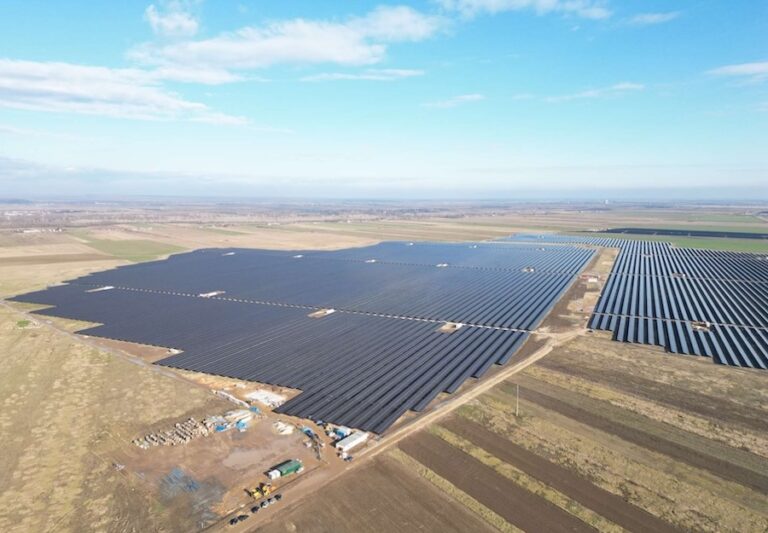
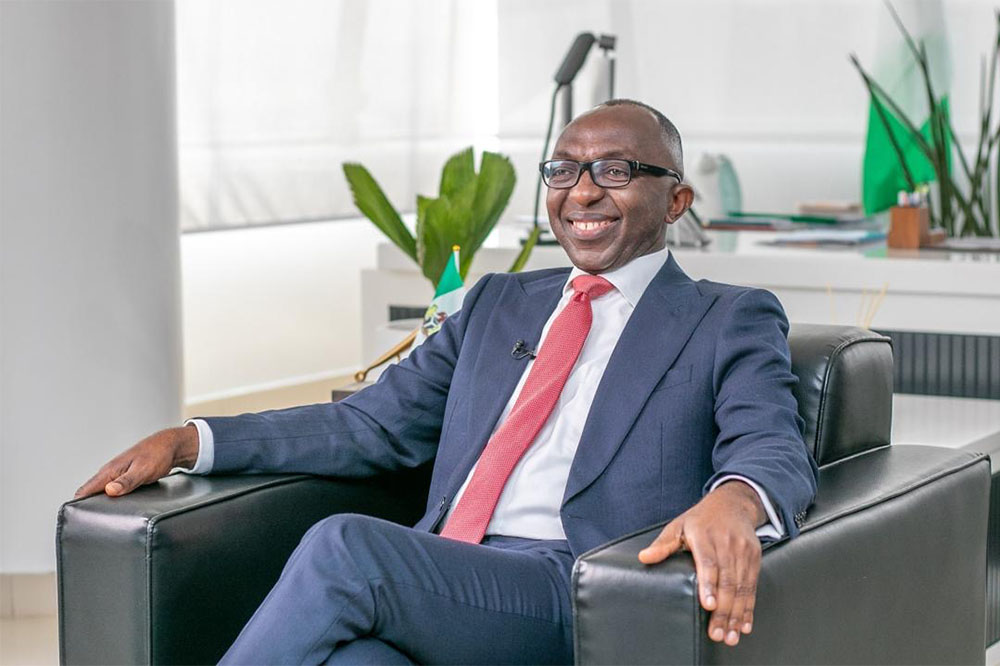
Armstrong Takang, MOFI’s CEO, frames technology not as garnish but as core. “We see technology not only as a tool for digital transformation but as a fundamental asset class from an investment perspective,” he says. That is a big shift. It means satellite capacity and 90,000 kilometers of fiber stop being PowerPoint promises and start being the rails for agriculture logistics, tele-health, cloud services, and digital finance. It means state-owned enterprises are pushed toward real governance, and that a sovereign story about AI is written by implementers rather than commentators. It also means the country’s fintech fame stops living in isolation; those unicorn logos now sit on top of connective tissue the state is deliberately laying down.
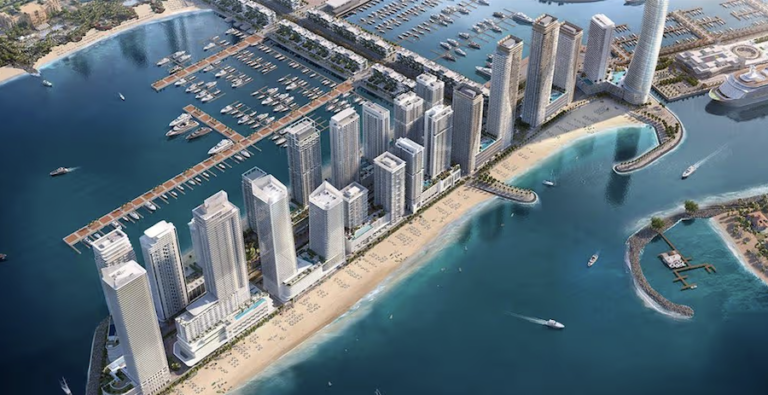
Real estate is the most disciplined proof of concept. Nigeria’s housing gap is gigantic, and the old model—government tries to build, underwrites the politics, underdelivers on the homes—was never going to catch up.
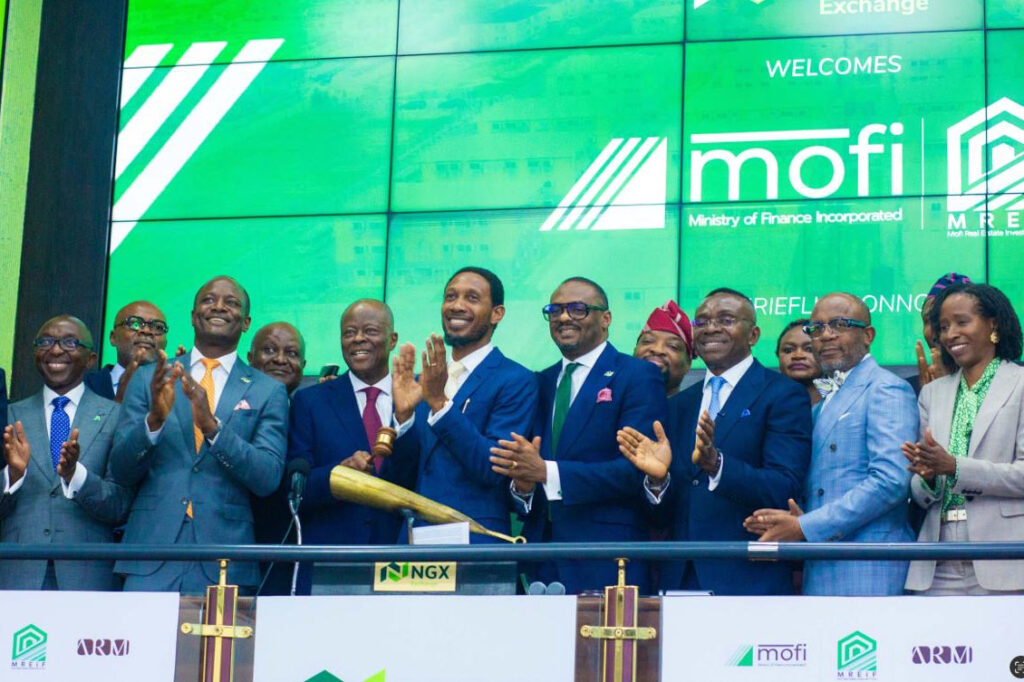
The momentum behind this shift became unmistakable when the MOFI Real Estate Investment Fund moved onto the Nigerian Exchange (NGX), not as a ceremonial listing but as a structural milestone that fundamentally changes the way housing is financed in Nigeria. The listing signals that real estate is no longer treated as a slow, government-dependent obligation but as an investable, tradable asset class designed for scale and long-term growth. It invites pension funds, institutional investors, and the global diaspora into a transparent, regulated market with real liquidity. By turning affordable housing into a capital-market instrument—complete with credit ratings, governance mechanisms, and clear performance benchmarks—MOFI has plugged real estate directly into the engine room of Nigeria’s financial system. It is a decisive, confidence-building move that demonstrates how major national challenges can be transformed into investable opportunities when the architecture is right.
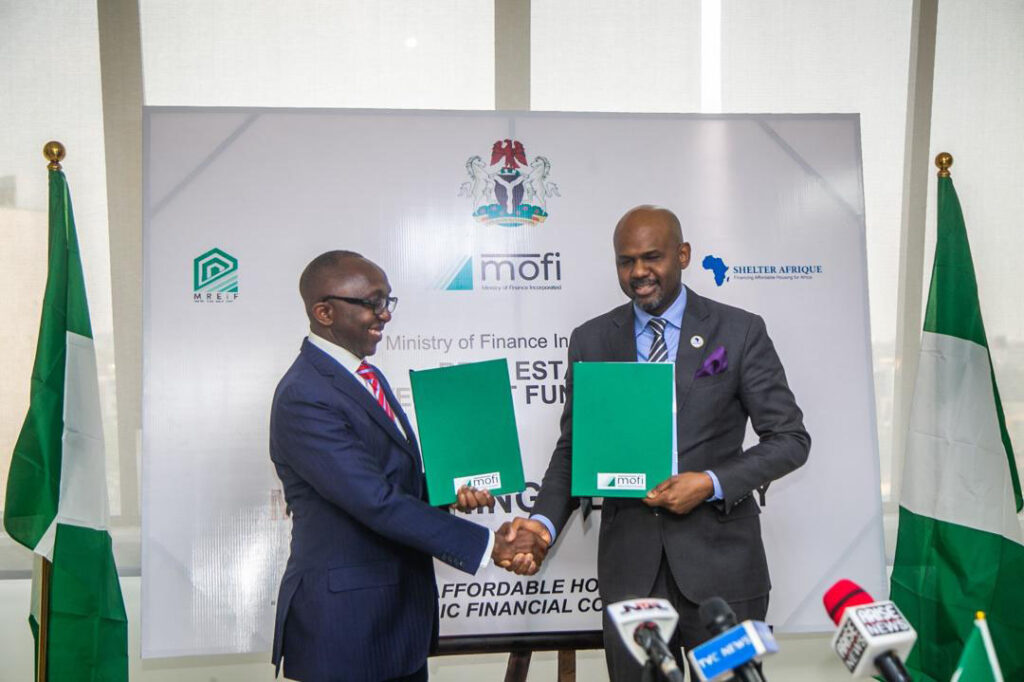
MOFI’s answer is blended finance. Government puts in concessionary money to de-risk the vehicle, private institutions bring scale, mortgages run 20 to 25 years at single-digit rates, and primary mortgage banks finally have liquidity to write loans. Takang is clear about the intent: crowd in private capital by taking first loss, create an investable instrument, and let market mechanics do the rest. For once, the headlines match the mechanics: an anchor state investor, rated paper, and a program that aims to be a market maker, not a subsidy machine. For investors seeking credible growth markets, that sounds like precision, not promise.
Confidence is also data. It shows up when a Eurobond books fast, when domestic issuances are meaningfully oversubscribed, when the central asset list is audited and public rather than rumored and political. None of that erases risk—every dynamic market carries its learning curve—but investors don’t need guarantees, they need visibility. Takang’s line here is telling: “Investor confidence is often a reflection of what they see us investing in… we must have skin in the game.” That skin is the state’s own capital in housing, rails and fiber, sovereign guarantees where they unlock crowd-in, and governance scorecards for enterprises that used to be protected fiefdoms. You can call that policy; markets call it traction.
“We’re building a Nigeria that investors can believe in, and Nigerians can be proud of.”Dr Armstrong Takang
The country’s demographic advantage is the emotional engine behind the spreadsheets. A young population that already codes, builds, sells and ships is asking for two things: bandwidth and financing. The first is obvious—cloud and connective infrastructure. The second is more nuanced—risk capital that does not punish youth, training that anticipates AI rather than fears it, and funds aimed at turning energy and creativity into firms with payrolls. This is where MOFI aligns sovereign finance with entrepreneurial momentum: youth funds alongside infrastructure, satellite alongside seed, mortgages alongside mezzanine capital. The vision is not just a new narrative; it is a new normal where housing and hyperscalers, payments and ports, all power a single growth engine.
Nigeria’s story today is defined by structure and purpose. The country is setting standards, measuring progress, and connecting ambition to capital with unusual discipline. If MOFI stays consistent on governance and crowd-in, if macro stability continues to strengthen, if the housing machine scales, then the loudest thing about Nigeria in five years will be its results. It is hard not to be inspired by a place where families are picking up keys to their first homes because a financing instrument finally worked as designed, and where a national tech backbone is being built with the confidence of a founder and the precision of a fund manager. The energy has always been there. What’s changed is the architecture behind it.
What, concretely, changed when MOFI shifted from a registry to an active investment manager?
We now enumerate and confirm ownership of federal investment assets, professionalize governance in government-owned enterprises, mobilize resources into priority sectors, and, critically, build MOFI as an institution that attracts capital rather than chases it. The goal is to deliver value, not just hold titles.
How does the real-estate program actually lower the cost of mortgages for ordinary Nigerians?
We use a blended-finance model. Government money at concessionary rates de-risks the fund. Institutional investors come in at commercial rates. We create a capital-market instrument and on-lend liquidity to primary mortgage banks. That allows 20- to 25-year tenors at roughly single-digit rates, with far more liquidity than the system has seen in years.

Many investors still see Nigeria through an outdated risk lens. What evidence do you point to that the trajectory has shifted?
Stability in FX that allows planning, growth in reserves to support repatriation, inflation trending down. On the markets side, look at how quickly recent books have filled. More important, we insist on ‘skin in the game.’ If we are asking you to invest in a sector, you should see where we put our own money and the governance we enforce.
You speak about technology as an asset class. What does that look like in practice?
National fiber, cloud capacity, and satellite are enablers for every other sector—agriculture, health, finance, trade. We are backing those rails while also catalyzing funds for youth-led tech and creative firms. The objective is simple: make sure our young population has the tools, the capital, and the market access to build companies that last.
What does success look like to you personally over the next decade?
Three things. Enriching the lives of ordinary Nigerians—homes, jobs, businesses. Elevating the country’s stature so a Nigerian passport commands respect. And building MOFI into a trusted platform that signals quality. When people say ‘MOFI is in the deal, I can trust it,’ we’re getting it right.