
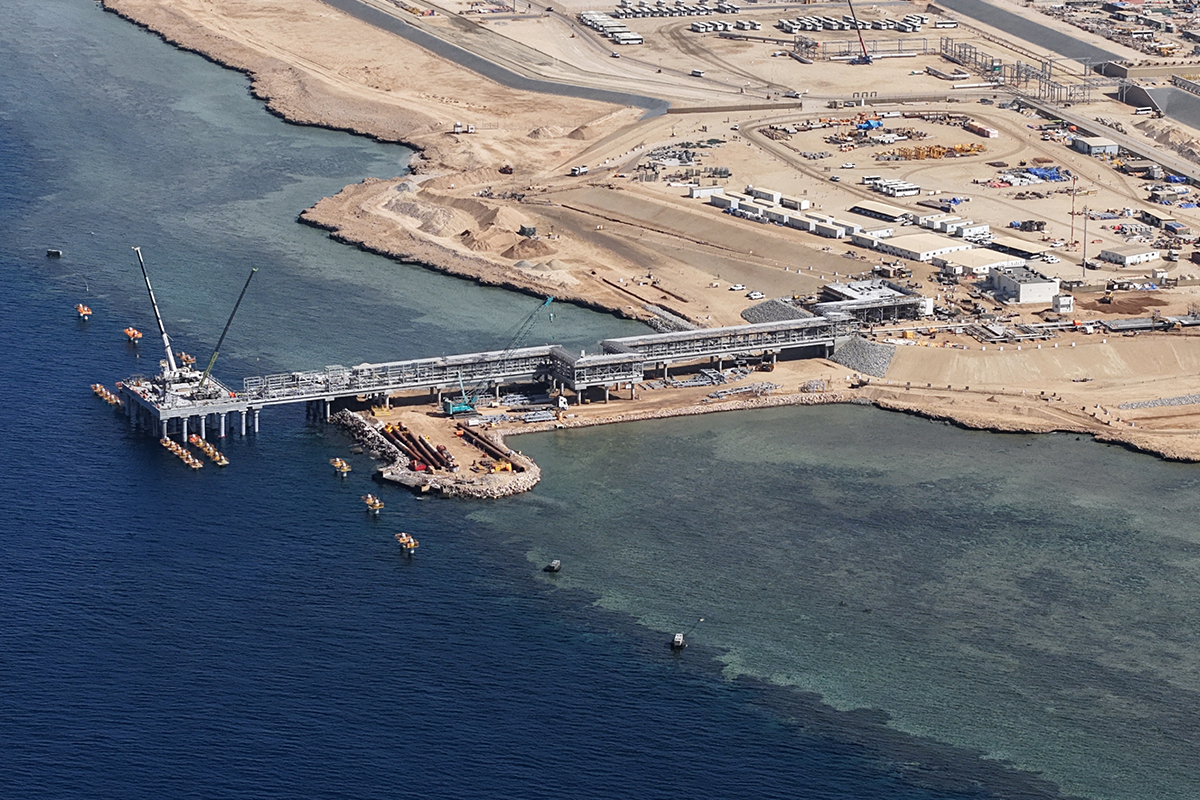

Saudi Arabia isn’t just investing in clean energy — it’s manufacturing global trust. At the heart of that transformation is NEOM Green Hydrogen Company’s sprawling green hydrogen facility on the Red Sea coast, where the milestone of eighty percent construction completion marks more than progress. It signals that the world’s largest integrated renewable hydrogen-to-ammonia operation is shifting from blueprint to freight corridor.
CEO Wesam Alghamdi captures this transformation succinctly: “Construction has passed the 80 percent milestone… now it’s mostly around testing and commissioning.” That moment matters. What looks like a technical update is actually the point when abstract ambition becomes deliverable reality.
Commissioning is the hidden pivot between vision and delivery. “We’re commissioning the largest green hydrogen plant ever built at scale… you need the right processes and procedures to make sure it runs smoothly,” Wesam says. As NGHC moves from huge concrete foundations into the phase where power flows, molecules form, and storage vessels await shipping berths, confidence shifts from if to when. For a world searching for proof that green hydrogen can scale, Saudi Arabia is giving it physical form.
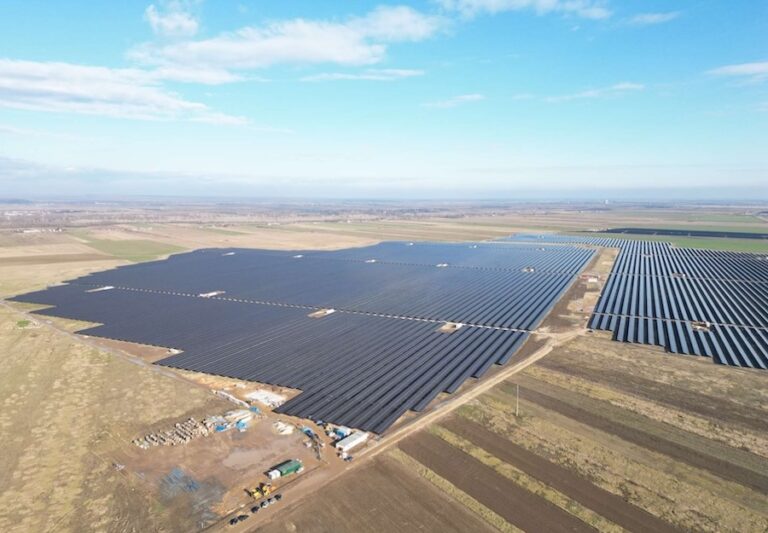
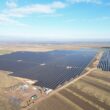
The 2025 project updates confirm the timeline: four gigawatts of solar and wind generation are on track for completion by mid-2026, followed by commissioning of the electrolysers and the first product available in 2027. By then, the facility will produce up to 600 tonnes of hydrogen a day, converted into 1.2 million tonnes of green ammonia a year — enough, as Wesam notes, “to run around 20,000 hydrogen-fueled buses.” It’s a staggering new industrial rhythm powered by sunlight and wind.

What makes NGHC extraordinary isn’t just the technology; it’s the ecosystem it represents. This is export-scale hydrogen designed for heavy industry, shipping, and transportation — sectors that need clean molecules, not promises. “Industry is ready now to take hydrogen as fuel… applications are growing every day,” Wesam says. Those applications are no longer speculative. The project’s $8.4 billion financing, backed by 23 international lenders and a long-term offtake with Air Products, has already converted belief into bankable structure. The result is an energy project that global boards and financial institutions can model, fund, and replicate.
Execution at this magnitude is always human before it becomes mechanical. NGHC is constructing not only a plant but a generation of expertise. “We had a tailored program for fresh grads… so they can apply it immediately,” Wesam explains. That partnership with the Energy & Water Academy has become one of Vision 2030’s quiet success stories. Inside the company, more than 20 nationalities now collaborate, with female participation rising to 13 percent, including operational roles. “Every day, leaving the office, I see the operators coming back from site, fresh grads, female and male — it makes my day,” he says. Saudi Arabia’s next export might just be technical capability itself.
“NGHC isn’t asking the world to change behaviour first — it’s changing the physics of supply so behaviour can follow.”
CEO Wesam Alghamdi
Technology sits at the core of that capability. NGHC is embedding intelligence into every layer of its design. “We’re building the plant for AI applications,” says Wesam. Digital twin modeling, predictive maintenance, and cyber-secure operational analytics will enable the plant to respond dynamically to fluctuating renewable inputs. “There are a lot of software solutions… we’re already testing them,” he adds. The plant’s architecture is designed to evolve — to absorb advances in electrolyser efficiency, storage, and power management over decades, not just survive them.
Once fully operational, NGHC will avoid up to five million tonnes of carbon emissions annually — the equivalent of taking a million cars off the road. Those numbers carry more than environmental weight; they establish a benchmark for industrial decarbonization. “The market is there,” Wesam says. “We’re proving to everyone that it can be done at scale.” NGHC isn’t just fulfilling Vision 2030’s pledge to diversify the economy — it’s redefining what energy leadership means in the twenty-first century.
In a world where most green-hydrogen stories are still feasibility studies, Saudi Arabia’s is a running plant. The significance is both technical and philosophical. Hydrogen has long been called the fuel of the future. The real story is that the future has a location. When the first shipments leave the Red Sea, the debate will no longer be about possibility but replication. Saudi Arabia has built the model. The rest of the world is now on its clock.