
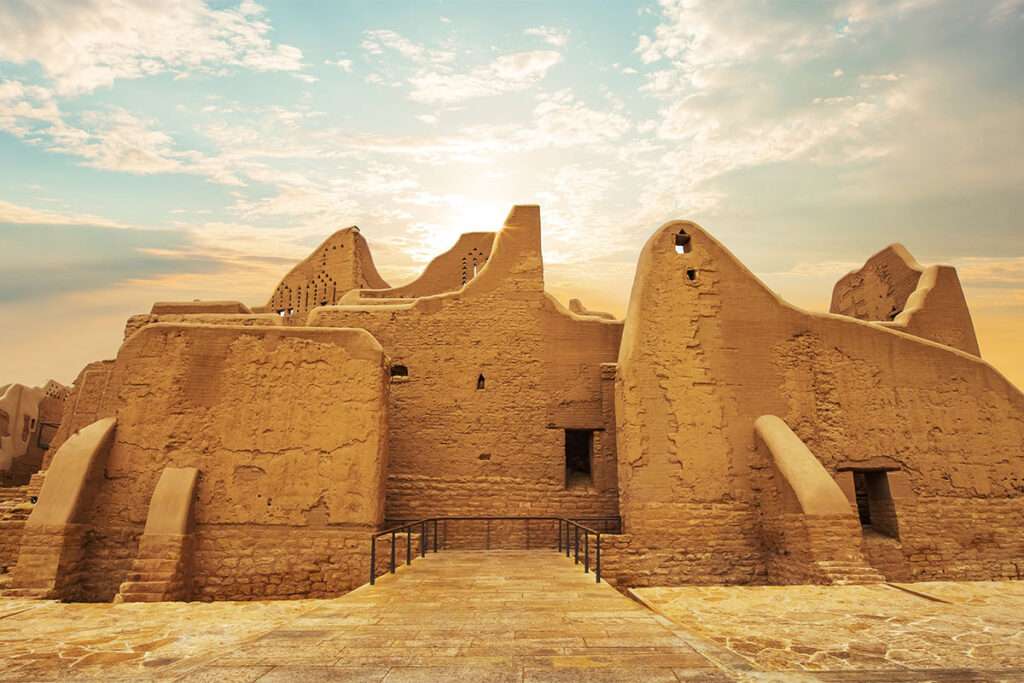
Diriyah isn’t just where Saudi Arabia began — it’s where the Kingdom is redefining itself. On the edge of Riyadh, this once-sleepy mud-brick settlement is fast becoming one of the world’s most ambitious cultural developments: a 14-square-kilometre city built on the philosophy that heritage and progress can advance together. At its core lies a simple but radical idea — that a nation’s past can become its most powerful blueprint for the future.
Diriyah is the birthplace of the Saudi state, the soil where the Banu Hanifa tribe once built the peninsula’s first agricultural society and where Imam Muhammad bin Saud founded the first Saudi dynasty nearly three centuries ago. Today, under the same sun, it is rising again — not as a relic, but as the living embodiment of Vision 2030, a national transformation that sees culture not as nostalgia, but as strategy.
“I think Diriyah is probably the perfect embodiment of the reality of Vision 2030,” says Kiran Haslam, chief marketing officer of Diriyah Company. “The leadership has made clear that the greatest commodity the Kingdom has is its people. So we’re building a place designed for people — pedestrian, community oriented, walkable, and profoundly Saudi.”
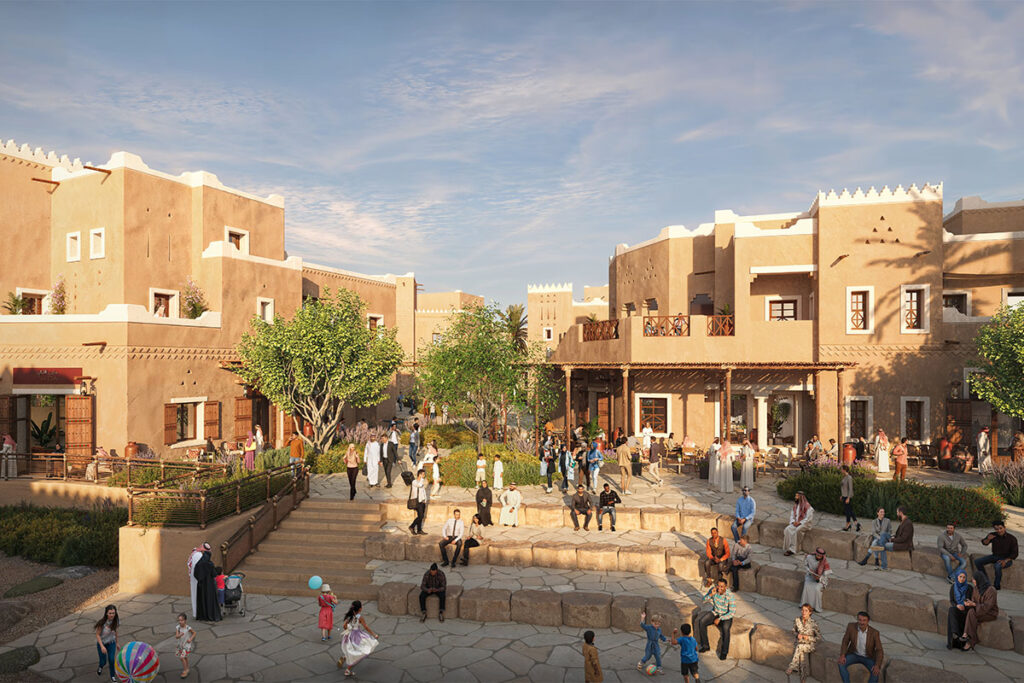
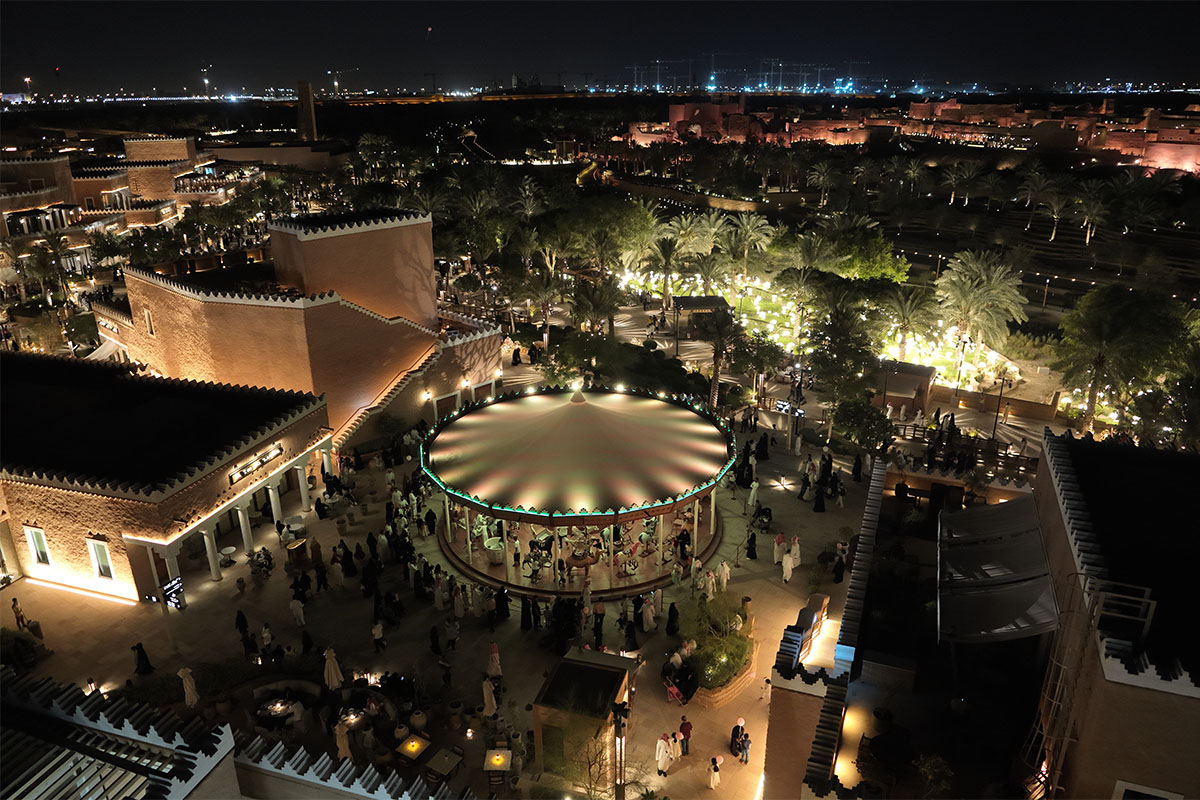
That vision is remarkably literal. Diriyah’s master plan spans 14 square kilometres — six and a half times the size of Monaco — yet the first districts are entirely car free. Visitors walk through shaded alleyways lined with Najdi-style buildings, each constructed from adobe and mud brick, their triangular apertures echoing the techniques of the 18th century. The air feels different here, less hurried than Riyadh’s glass skyline ten minutes away. It’s a city that wants you to slow down, to walk, to look up.
“What we’re doing is deconstructing the modern metropolis,” Haslam explains. “When you walk around Las Ramblas in Barcelona, you engage with people. You see a magician on the corner, a woman leaning over a balcony, a child chasing a ball — that’s culture. That’s the kind of exchange we want to bring to life again in Diriyah.”
This notion of “living heritage” is what makes Diriyah stand apart from the giga projects redefining Saudi Arabia’s map. While others push the boundaries of futuristic architecture, Diriyah’s radicalism lies in restraint. Its innovation is cultural — in the insistence that the past has currency, that a UNESCO World Heritage site can evolve without erasing its soul.
“The greatest commodity the Kingdom has is its people — and Diriyah is built for them.”
Kiran Haslam, CMO, Diriyah Company
The scale of that task is staggering. More than 30 hotels — from Six Senses to Armani — are integrating traditional Najdi architecture within strict building codes that limit height to just two stories. “We’ve had to work very closely with each brand,” Haslam says. “They’re used to operating towers in Hong Kong or Dubai. Here, they’re learning how to build courtyards and mud façades, how to express luxury through simplicity. And they’ve embraced it beautifully.”
For Jerry Inzerillo, Diriyah’s group CEO, the stakes are as cultural as they are economic. “Our main project in Diriyah is on time and on budget,” he said recently. “We expect billions of U.S. dollars of foreign private investment, and we plan to pursue an IPO after 2030.” But for Inzerillo, the ambition runs deeper than capital. “It is a major responsibility to preserve amazing places and develop new assets that ensure their preservation while reflecting centuries of tradition and history,” he said in a recent interview.
That duality — preservation and progress — defines Diriyah’s philosophy. Sustainability is woven through its DNA, not just as an environmental goal but as a cultural one. “Tourism will always have an impact,” Haslam admits, “but we’re asking: how can that impact be a force for good?” From water recirculation systems that reuse every drop up to four times, to waste management and solar integration, every element of the city’s design is engineered to reduce its footprint while enriching local livelihoods. “It’s about ensuring that the community thrives from what we build,” Haslam adds. “That a poet writing in the Diriyah dialect has a place here just as much as a global traveler.”
The idea of place — of belonging — sits at the heart of Diriyah’s identity. For Saudis, this is not just a development. It is a mirror held up to their own story. “We call it the City of Earth,” says Haslam. “Because everything here — from the materials to the mindset — comes from this land.” It’s a poetic description that captures what many visitors find most striking: the optimism of the people.
“The truth of the optimism in the people,” Haslam says softly, “that’s what surprises visitors most. There’s a genuine belief that today is beautiful and tomorrow will be magnificent. When you’re surrounded by that, you feel it. It’s intoxicating.”
And perhaps that is what makes Diriyah so compelling. Beyond the architecture, beyond the master plans and hotel partnerships, it is a human story — one of memory and momentum, of a nation rediscovering itself through the spaces it rebuilds. Inzerillo calls it a “moment in time that may not be repeated by any other country.” Diriyah proves that the fastest way forward can begin by walking back to where it all began.