




In everything we do, culinary is a key pillar—just as much as wellness and sustainability” says Anthony Clement, general manager of The Chedi Luštica Bay. It’s a bold statement, but one that quietly unfolds in every detail of the guest experience. At this Adriatic retreat, food is not just an indulgence. It is a language, a way to anchor memory, and a reflection of place.
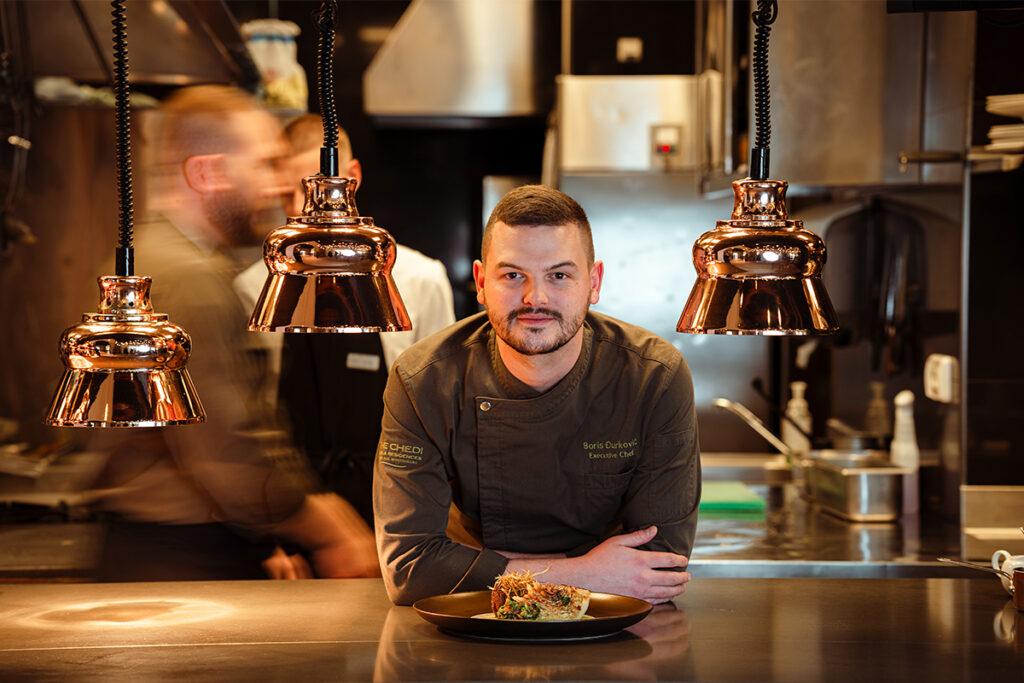
The soul of the kitchen belongs to executive chef Boris Đurković. Though unassuming in manner, his presence resonates in every dish. For Đurković, gastronomy is about connection. “It’s immediate, emotional and personal,” he says. “The food helps shape the atmosphere and the rhythm of each day.” That rhythm is informed by a deep respect for Montenegro’s culinary heritage and its land. Ingredients are sourced with intention and menus evolve naturally. Each season brings its own tone, whether it’s the earthy richness of wild mushrooms in autumn or the bright acidity of strawberries caught at their peak.
Đurković doesn’t replicate old recipes. He interprets them. The local becomes international not by masking its origins, but by being refined through a contemporary lens. “We preserve the soul of the dish and elevate it,” he says. It’s a form of quiet craft, where freshness is non-negotiable, balance is sacred, and presentation is precise without becoming performative. The result is a cuisine that is thoughtful rather than ostentatious—something guests return for, not because it shouts, but because it stays with them.
There is a deeper philosophy at play. Đurković and his team work closely with small producers, farmers, fishermen and foragers. These are not vendors. They are partners. They inform the menu. They let the chefs know what’s ready—when the herbs are freshest, which catch has just come in, what fruit the land is offering that week. “We work with the land and sea, not against it,” he says. This creates an honest rhythm that is both sustainable and emotionally resonant. It means the food doesn’t just represent Montenegro—it responds to it.
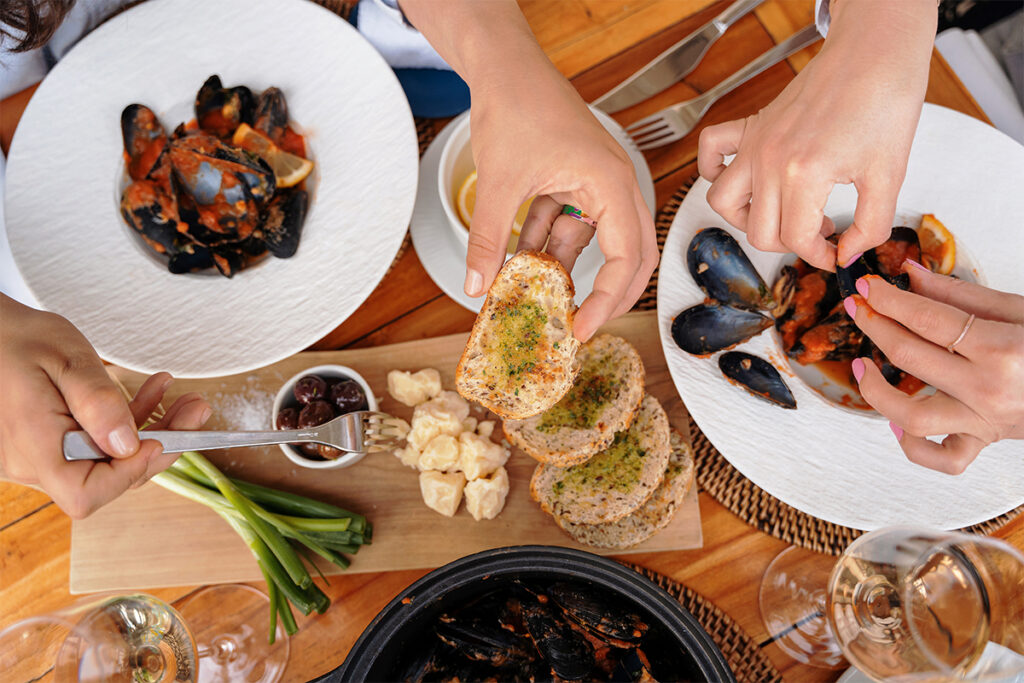
Guests might not notice all the moving parts behind each dish, but they feel them. They taste them. One of the hotel’s most popular dishes, sea bream ceviche with strawberries, emerged almost by accident. During a chef-led market tour in Kotor, guests are invited to choose ingredients that inspire them. The chef then prepares a bespoke lunch using their finds. The ceviche was a one-off creation that struck such a chord it became a staple on the menu. It’s a dish that tells the story of spontaneity, of collaboration, of time and place. That, in essence, is The Chedi’s approach: rooted, responsive, refined.
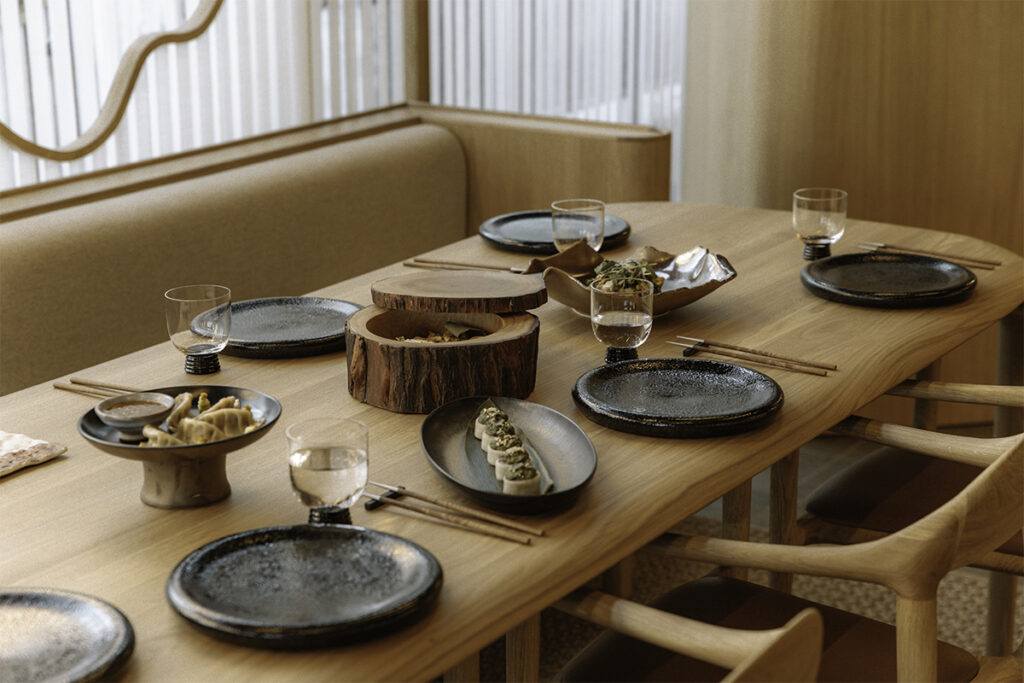
A different kind of expression arrives with The Japanese, the hotel’s most recent opening. Set along the marina, it offers an omakase-style experience built on elegance, restraint, and precision. It’s a culinary shift that widens the lens without losing focus. “It’s still deeply connected to where we are,” says Đurković. In the kitchen, Chef de Partie Ibrahim brings fresh energy and quiet ambition. His presence signals a commitment not only to expanding the hotel’s repertoire, but to nurturing new talent in the process.
“Montenegro is on the plate—culinary is not a service here, it’s one of our pillars.”
Boris Đurković, executive chef, The Chedi Luštica Bay
While the restaurants are distinct in setting—from the polished interiors of The Restaurant to the breezy marina vibe of The Spot, and the cliffside charm of The Rok—each shares the same DNA. They are elegant without being exclusive. They tell a story without needing to explain it. And in every corner, there is that sense of dialogue between past and present, between the guest and the plate.
Đurković doesn’t believe in a single origin story for his own culinary journey. His voice is shaped not by a moment, but by an enduring rhythm—a childhood fascination with cooking that became a profession defined by purpose and detail. “It’s a lifelong friendship with food,” he says. That clarity, that steady passion, is what he brings to the kitchen each day.
Looking ahead, he is focused on deepening sustainability efforts—waste reduction, whole-ingredient use, and a creative, respectful approach to local sourcing. It’s not about trend, but integrity. “That mindset pushes us to be even more creative,” he says.
If he had to curate a single meal to express the culinary soul of Montenegro, it would be this: a piece of fish, caught that morning from the Adriatic, grilled simply, served with local herbs from Luštica, a splash of olive oil and a squeeze of lemon. “It’s the sea, the land and the tradition on a plate,” he says. No unnecessary embellishment. Just honesty.
That, perhaps, is the defining quality of The Chedi Luštica Bay’s culinary identity. It doesn’t compete for attention. It doesn’t aim to impress. It invites you to remember. And in a world of curated perfection, that quiet confidence is a luxury all of its own.